Startup warehouses and small fulfillment operations face a procurement decision that larger businesses rarely think about: how much forklift is actually enough? The instinct to buy a 3-ton forklift "for future growth" is understandable, but for a business whose daily loads rarely exceed 800 kg, that decision locks up capital in equipment that spends most of its time underutilized, occupies aisle space the warehouse cannot afford to lose, and generates maintenance and energy costs that are disproportionate to the work being done.
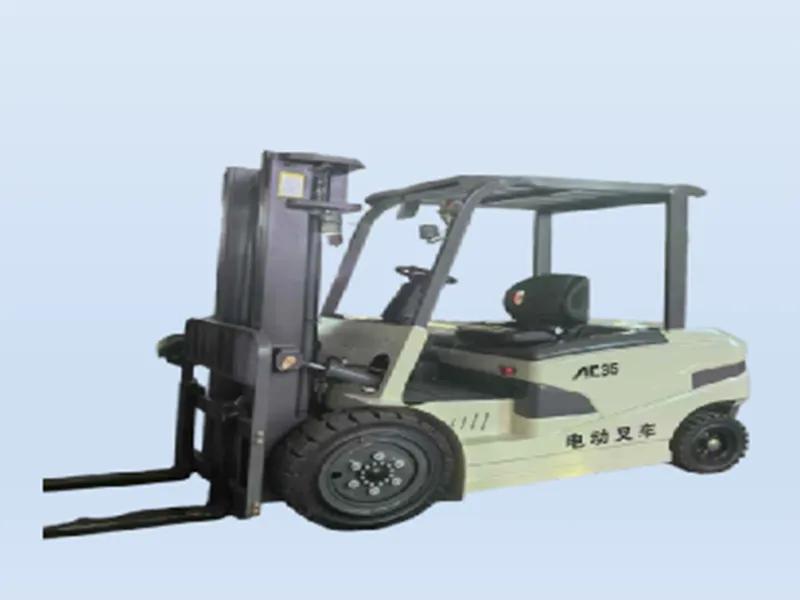
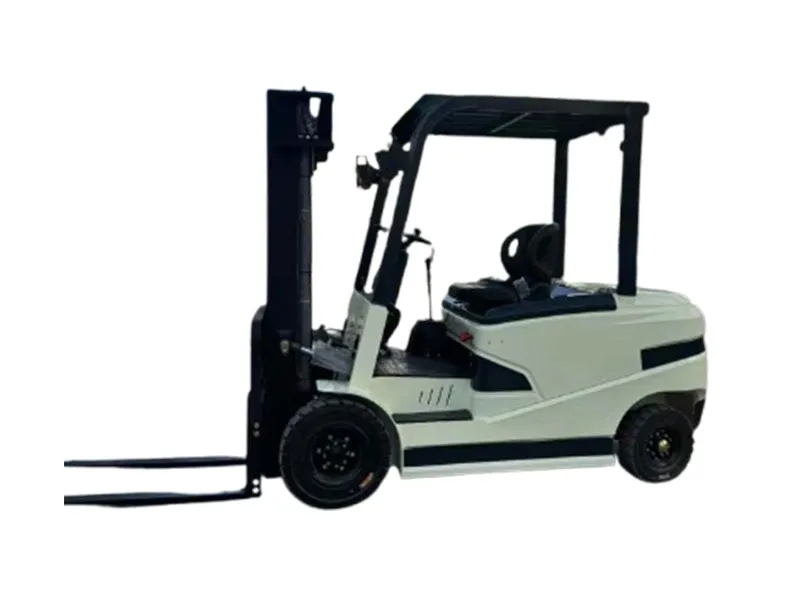
The smarter approach for startup warehouses, small e-commerce fulfillment centers, light manufacturing workshops, and retail backrooms is to match the equipment to the actual workload—not the theoretical maximum. A 1 ton forklift for sale is designed for exactly this operating profile: loads up to 1,000 kg, compact turning radius for narrow aisles, electric drive for indoor air quality, and a purchase price that protects cash flow during the growth phase when capital allocation decisions have the most impact. JC Lifting Machinery's 1-ton forklift supports indoor and outdoor operations including floor and elevator-related handling, with a 3,000 mm maximum lifting height, 2,095 mm minimum turning radius, and hydraulic power steering—a specification set built for the practical realities of small business material handling.
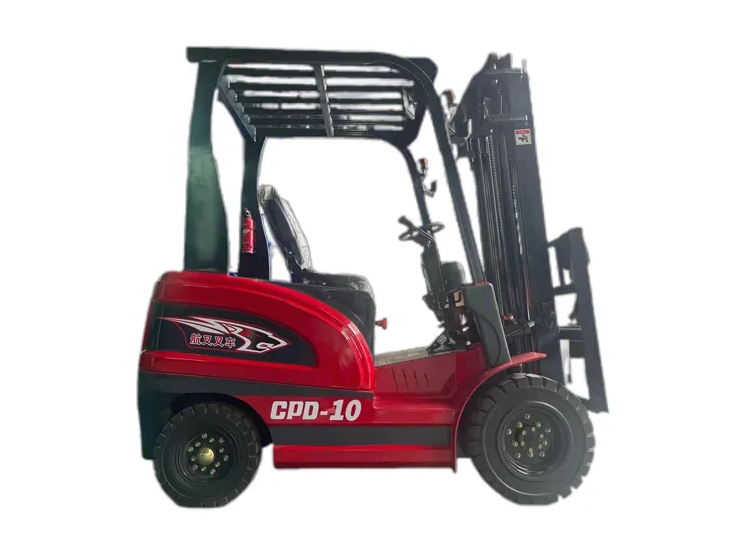
Why a 1-Ton Forklift Fits Startup Warehouse Budgets Better Than Oversized Equipment
The capital efficiency argument for a 1-ton forklift is straightforward when the numbers are examined honestly. A 3-ton forklift costs significantly more to purchase, requires wider aisles to operate safely, weighs more (creating higher floor load requirements), consumes more energy per operating hour, and generates higher maintenance costs—all for lifting capacity that a startup warehouse will rarely use.
The startup warehouse reality in 2026:
Most small warehouses handle standard pallets loaded with cartons, components, or packaged goods. A standard EUR pallet loaded to typical e-commerce or light manufacturing weights falls well within the 1-ton capacity range. The 3-ton forklift's additional capacity is not protecting the business from overload—it is creating overhead that the business is paying for every day without benefit.
The space efficiency argument:
JC's 1-ton forklift has an overall frame width of 955 mm and a minimum turning radius of 2,095 mm. In a startup warehouse where aisle widths are often 2.5–3.0 meters and every square meter of floor space has a cost, this compact footprint allows the forklift to operate in aisles where a larger machine would require either wider aisles (reducing storage density) or slower, more careful maneuvering (reducing throughput).
The cash flow argument:
For a startup business managing growth with limited working capital, the difference in purchase price between a 1-ton and a 3-ton forklift is capital that can be deployed in inventory, marketing, or operational improvements that generate direct revenue. Buying more forklift than the business needs is not a conservative decision—it is a capital allocation mistake that reduces the resources available for growth.
JC's 1-ton forklift has a rated lifting capacity of 1,000 kg, making it a focused solution for small business material handling rather than an oversized investment in capacity that will not be used.
How a Compact Warehouse Forklift Improves Handling Efficiency
The efficiency improvement from replacing manual or semi-manual pallet handling with a compact electric forklift is one of the most immediate and measurable ROI drivers available to a startup warehouse. Understanding the working principle helps buyers evaluate whether the specification matches their specific workflow.
The operating mechanism:
The operator sits in the forklift and uses the controls to position the forks under a pallet or load. The hydraulic mast raises the load to the required height. The electric drive motor moves the forklift through the warehouse at controlled speed. The hydraulic power steering system allows precise maneuvering in tight spaces. The battery provides the energy for both drive and lift functions throughout the working shift.
Key performance parameters from JC's 1-ton forklift:
Maximum lifting height: 3,000 mm—sufficient for standard 3-level racking in most startup warehouse configurations
Maximum working height: 3,880 mm—the total height of the mast when fully extended
Minimum turning radius: 2,095 mm—allows operation in aisles as narrow as approximately 2.8–3.0 meters with standard pallet handling
Travel speed: 11 km/h unloaded, 8 km/h fully loaded—practical warehouse movement speed
Gradeability: 15% fully loaded—supports ramp and dock transitions
Battery: 60V, 70Ah—supports a full working shift with planned charging
The efficiency improvement logic:
A warehouse worker manually moving pallets with a hand pallet truck covers approximately 20–30 meters per minute at walking pace, with significant physical effort per pallet. A forklift operator moving the same pallets covers the same distance in a fraction of the time, with no physical lifting effort, and can stack loads vertically rather than only moving them horizontally. For startup warehouses where a small team is responsible for receiving, putaway, picking, and dispatch, the throughput improvement from even one compact forklift can be transformative—with practical handling efficiency improvements of up to 200% versus manual movement depending on route length, pallet weight, and workflow design.
Key Specifications to Check Before Buying a 1-Ton Forklift
Selecting a forklift by capacity alone is insufficient. The specification must match the warehouse layout, pallet dimensions, aisle width, lift height requirement, floor condition, and battery duty cycle.
Complete Specification Reference
| Specification | JC 1-Ton Forklift Value | Buyer Evaluation Point |
|---|
| Rated capacity | 1,000 kg | Confirm maximum pallet weight including packaging |
| Load center | 500 mm | Standard for most pallets; confirm for non-standard loads |
| Maximum lifting height | 3,000 mm | Match to highest rack level in the warehouse |
| Maximum working height | 3,880 mm | Confirm clearance for overhead obstructions |
| Minimum turning radius | 2,095 mm | Measure actual aisle width and turning zones |
| Overall width (wheels) | 1,030 mm | Confirm door and elevator clearance |
| Frame width | 955 mm | Confirm aisle and rack clearance |
| Machine weight (unloaded) | 1,700 kg | Confirm floor load capacity, especially for elevated floors |
| Travel speed (unloaded) | 11 km/h | Assess warehouse route distances and throughput |
| Travel speed (loaded) | 8 km/h | Assess loaded movement productivity |
| Gradeability (loaded) | 15% | Confirm against ramp and dock gradients |
| Drive motor | 3 kW AC | Electric drive performance |
| Lifting motor | 1.2 kW DC | Hydraulic lifting performance |
| Battery | 60V, 70Ah | Plan charging schedule against shift hours |
| Charger input | 220V | Confirm electrical supply at charging location |
| Charging time | 8 hours | Plan overnight charging or shift rotation |
The specification matching process:
Before requesting a quotation, measure the warehouse's narrowest aisle width, the highest rack level that needs to be served, the maximum pallet weight in the product mix, and the available charging location. Compare these measurements against the forklift's turning radius, lifting height, capacity, and charger requirements. A forklift that does not fit the warehouse's physical constraints will create operational problems regardless of its other specifications.
Application Scenarios: Where a 1-Ton Forklift Outperforms a 3-Ton Forklift
The 1-ton forklift's competitive advantage over larger equipment is strongest in environments where space efficiency, capital efficiency, and operational flexibility matter more than maximum lifting capacity.
Startup Warehouses and Small Fulfillment Centers For businesses handling standard pallets of e-commerce inventory, consumer goods, or light industrial products, the 1-ton capacity covers the vast majority of daily handling tasks. The compact turning radius allows operation in the narrow aisles that maximize storage density in small warehouse footprints. The lower purchase price preserves capital for inventory and growth investment.
Small Manufacturing Workshops Light manufacturing operations that move components, molds, semi-finished goods, and finished products between workstations and storage areas benefit from a compact forklift that can navigate workshop aisles without requiring the wide turning clearances that larger machines demand. The 3,000 mm lifting height supports standard mezzanine and rack storage configurations.
Retail Storage and Backrooms Retail operations with storage areas behind the sales floor often have limited space and narrow access points. The 955 mm frame width and 2,095 mm turning radius allow the JC 1-ton forklift to operate in storage configurations that would be inaccessible to larger equipment.
Indoor and Outdoor Mixed Operations JC states that the 1-ton forklift supports both indoor and outdoor operations, including handling work between floors and elevators and outdoor material movement. For businesses that receive deliveries at an outdoor dock and store goods in an indoor warehouse, the ability to operate in both environments from a single machine reduces the equipment investment required.
Businesses Avoiding Over-Capitalization For any business whose typical loads are consistently below 1,000 kg, purchasing a 3-ton forklift creates unnecessary capital pressure, space waste, and operating cost. The 1-ton forklift is the right-sized investment for the actual workload—not a compromise, but a deliberate capital efficiency decision.
Selection, Maintenance, and TCO: Protecting Startup Cash Flow with the Right Forklift
Selection Workflow
Step 1 — Define the actual load profile. Measure the maximum pallet weight, average load weight, load center distance, and pallet dimensions for the actual products being handled. Confirm that the 1,000 kg rated capacity covers the maximum load with an appropriate safety margin.
Step 2 — Measure the warehouse space. Record the narrowest aisle width, the tightest turning zone, door and elevator opening dimensions, and the highest rack level that needs to be served. Compare these measurements against the forklift's 2,095 mm turning radius, 1,030 mm wheel width, and 3,000 mm lifting height.
Step 3 — Assess floor and ramp conditions. Confirm the floor's load-bearing capacity against the forklift's 1,700 kg unloaded weight. Check ramp gradients against the 15% gradeability specification. Confirm floor surface smoothness for safe operation.
Step 4 — Plan the charging schedule. The 60V, 70Ah battery with 8-hour charging time requires planning around shift schedules. For single-shift operations, overnight charging is straightforward. For multi-shift operations, confirm whether a second battery or opportunity charging is required.
Step 5 — Confirm the electrical supply. The 220V charger input requires a standard single-phase outlet at the charging location. Confirm that the charging area has adequate electrical supply and ventilation.
Step 6 — Plan operator training. Even compact forklifts require trained operators for safe load handling, mast operation, and daily pre-use inspection. Include operator training in the deployment plan.
Maintenance and TCO Advantages
Lower purchase cost is the most immediate TCO advantage—the capital saved versus a 3-ton forklift can be deployed in inventory, marketing, or operational improvements that generate direct revenue for the startup business.
Reduced space consumption from the compact footprint preserves warehouse storage density. Every square meter of aisle space that a smaller forklift does not require is a square meter that can be used for racking and inventory.
Lower energy consumption from the 3 kW drive motor and 1.2 kW lifting motor reduces the daily electricity cost compared with larger machines with higher-power drive systems.
Simpler maintenance from the electric drive system—no engine oil, no fuel system, no exhaust—reduces the maintenance complexity and the skill level required for routine servicing.
Better capital efficiency for startups where cash flow management is critical. Avoiding the purchase of capacity that will not be used is not a compromise—it is sound financial management that preserves resources for the investments that drive growth.
Conclusion
For startup warehouses in 2026, the best forklift investment is not the biggest one available—it is the one that matches the actual load weight, aisle space, lift height, budget, and daily workflow. A 1 ton forklift for sale from JC Lifting Machinery provides 1,000 kg rated capacity, 3,000 mm lifting height, 2,095 mm minimum turning radius, hydraulic power steering, and indoor/outdoor application flexibility—the specification set that small business material handling actually requires, without the capital waste of oversized equipment.
Visit the JC Lifting Machinery 1-Ton Forklift product page to request a recommended configuration and quotation.
Please submit the following details for an accurate recommendation:
Work condition: Warehouse, workshop, retail backroom, indoor or outdoor use, floor condition (smooth/rough/ramp), elevator or dock use
Quantity: Single unit, pilot purchase, fleet plan, or annual procurement plan
Size/spec: Maximum load weight, pallet size, aisle width, required lift height, door and elevator clearance, charging voltage availability
Target metrics: Handling efficiency improvement target, budget limit, turning radius requirement, working hours per shift, charging schedule
Current problems: Manual handling fatigue, slow pallet movement, limited warehouse space, high labor cost, oversized forklift concerns, tight cash flow
FAQ
1. What is a 1-ton forklift?
A compact forklift designed to lift and move loads up to approximately 1,000 kg, typically used in small warehouses, light manufacturing workshops, retail storage areas, and e-commerce fulfillment centers where load weights are moderate and space efficiency is important. JC's 1-ton forklift offers 3,000 mm lifting height, 2,095 mm turning radius, and indoor/outdoor operation capability.
2. 1-ton forklift vs. 3-ton forklift: which is better for startups?
A 1-ton forklift is the better choice for startups whose typical loads are below 1,000 kg. It costs less to purchase, requires narrower aisles, consumes less energy, and preserves capital for other business investments. A 3-ton forklift is appropriate when loads regularly exceed 1,000 kg—but buying 3-ton capacity for 800 kg loads creates unnecessary capital pressure, space waste, and operating cost that a startup business cannot afford.
3. What is the ROI of buying a compact warehouse forklift?
ROI comes from faster pallet movement (improving throughput), reduced manual labor and worker fatigue (lowering labor cost and injury risk), avoided capital waste from oversized equipment (preserving cash flow), and improved warehouse space utilization from the compact footprint. For startup warehouses replacing manual pallet handling, practical handling efficiency improvements of up to 200% are achievable depending on route length, pallet weight, and workflow design.
4. Do we need to modify the warehouse before using a 1-ton forklift?
Usually only minor planning is required: confirm aisle width against the 2,095 mm turning radius, verify floor load capacity against the 1,700 kg machine weight, identify the charging location with 220V supply, confirm rack height against the 3,000 mm lifting height, and establish operator safety routes. Major structural modification is rarely required for a compact 1-ton forklift in a standard warehouse layout.
5. What parameters are needed for correct selection and quotation?
Maximum load weight, pallet dimensions and load center, required lifting height, aisle width and turning zone dimensions, door and elevator opening dimensions, floor condition and ramp gradients, indoor or outdoor use, working hours per shift, charging voltage availability, quantity, and current handling problems such as manual fatigue, slow movement, or space constraints.
 English