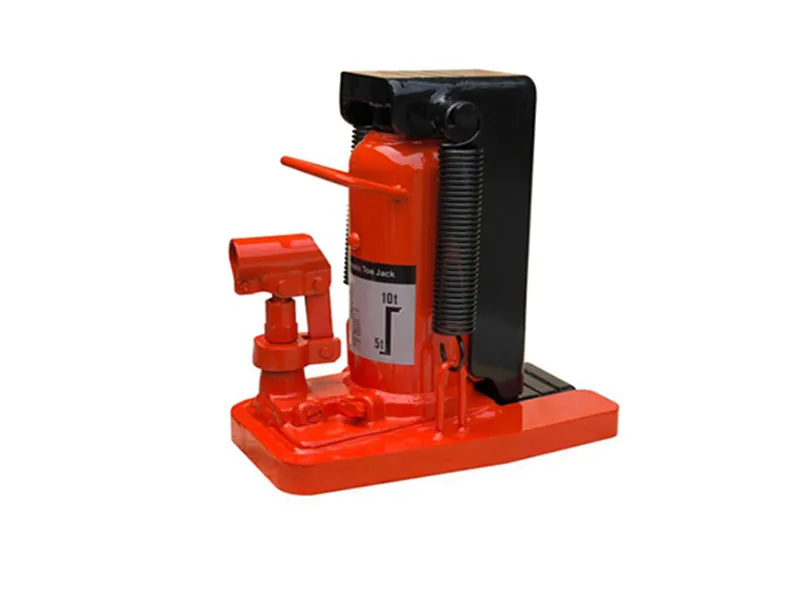
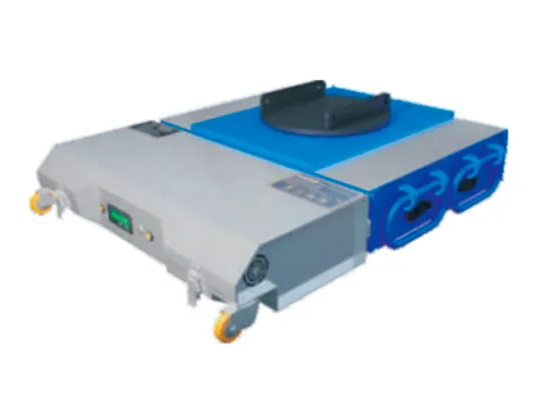
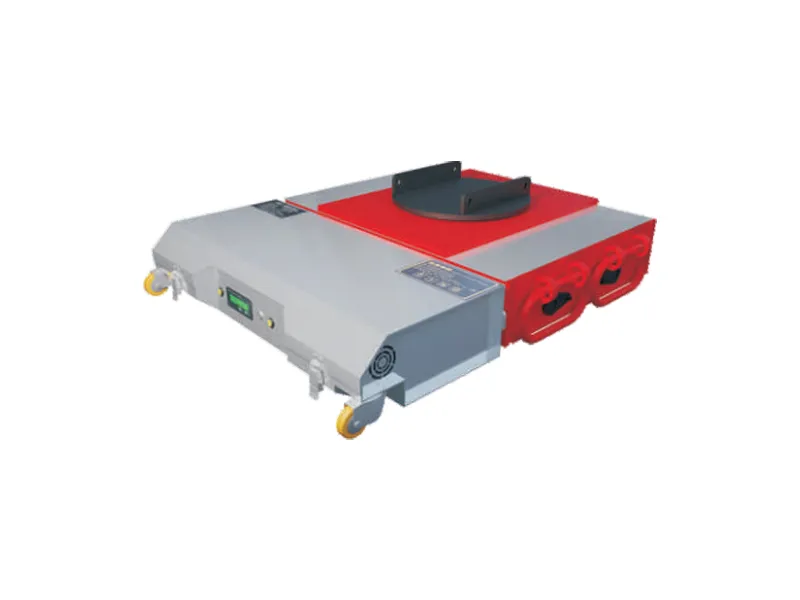
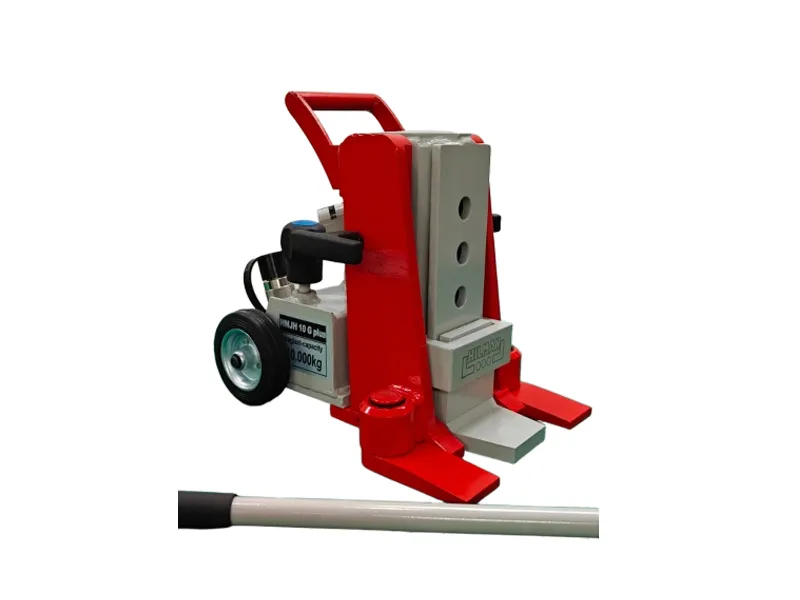
Whether you are a professional mechanic, a construction technician, or a heavy-equipment maintenance specialist, lifting tools play a critical role in daily operations. Among all hydraulic lifting solutions available today, the bottle jack stands out as one of the most powerful, compact, and versatile tools on the market. Its high load capacity, mechanical reliability, and small footprint make it indispensable for vehicle repair, workshop maintenance, and construction-site lifting tasks.
As a trusted lifting-equipment supplier, JUCAI has spent years developing durable, safe, and high-performance hydraulic tools—from electric pallet trucks to powered jacks and industrial lifting equipment. With strong R&D capabilities, advanced manufacturing technology, and an efficient service system, JUCAI continues to provide reliable lifting solutions for factories, warehouses, logistics facilities, and construction contractors worldwide.
This comprehensive guide explains what a bottle jack is, how it works, where it's used, and how it compares to a floor jack—helping you choose the best tool for your work.
What Is a Bottle Jack?
An industrial bottle jack is a compact, vertically oriented lifting device designed to raise heavy vehicles, machinery, and structural loads through controlled hydraulic pressure. Its name comes from its shape—resembling a bottle with a cylindrical body and a long neck.
Key Characteristics of Bottle Jacks:
High Lifting Capacity
Bottle jacks typically offer capacities from 2 tons up to 50+ tons, making them ideal for heavy-duty tasks.
Compact & Portable
Their small footprint makes them perfect for mobile mechanics, job-site contractors, and emergency roadside use.
Simple Operation
Powered by hydraulic force, bottle jacks require minimal physical effort compared to mechanical jacks.
Heavy-Lift, Low-Cost Solution
They offer high power at a lower cost compared to larger lifting equipment.
Because of their durability and strong lifting force, bottle jacks are widely used in automotive repair, construction, industrial maintenance, and agricultural operations.
How Does a Bottle Jack Work?
A bottle jack operates on the principles of hydraulic pressure, allowing users to lift heavy objects with minimal effort.
Basic Working Mechanism:
Pumping the Handle
When the operator pumps the handle, hydraulic fluid is forced from a reservoir into a high-pressure chamber.
Pressure Builds in the Cylinder
As hydraulic pressure increases, the piston (ram) extends upward.
Load Is Lifted
The rising piston lifts the load smoothly and safely.
Controlled Lowering
Opening the release valve allows the hydraulic fluid to return to the reservoir, lowering the piston and the load.
Why Hydraulic Lifting Works So Efficiently
Hydraulic systems use Pascal's Law, which states that pressure applied to a confined fluid is transmitted equally in all directions. This principle allows a relatively small pumping force to generate a massive lifting force.
Advantages of the Hydraulic System in Bottle Jacks
High lifting force with little manual power
Stable lifting motion
Strong resistance to overload when used properly
Long service life with proper maintenance
JUCAI's bottle jacks are engineered with reinforced cylinders, precision hydraulic seals, and high-grade steel construction to ensure maximum lifting safety and durability in demanding environments.
Applications for Bottle Jacks
Bottle jacks are widely valued for their versatility. Below are the most common applications in automotive and construction industries.
A. Automotive Repair & Vehicle Maintenance
Bottle jacks are a staple in vehicle shops, repair garages, and roadside assistance.
Typical Uses:
Lifting cars, SUVs, and pickup trucks for tire replacement
Raising heavy-duty trucks for axle or brake service
Supporting vehicle frames during repairs
Off-road and emergency roadside lifting
Why Mechanics Prefer Bottle Jacks
Compact enough to store in a vehicle
High lifting capacity compared to size
Capable of lifting trucks and heavy machinery
Affordable and reliable for long-term use
For mechanics, having a high-quality bottle jack is essential. Whether working in a mobile repair service or a professional workshop, a bottle jack ensures fast, powerful lifting whenever needed.
B. Construction & Heavy-Equipment Operations
Bottle jacks play a crucial role across construction sites due to their ability to lift large structural loads.
Common Construction Applications:
Lifting steel beams or structural components
Maintaining or adjusting heavy machinery
Leveling building foundations
Supporting equipment during repairs
Machinery positioning and alignment
Construction environments demand high power and reliability, which is why contractors prefer bottle jacks with reinforced sealing systems and high-strength steel bodies—both of which are strengths of JUCAI's product line.
Bottle Jack vs Floor Jack: Which Is Best for You?
Both bottle jacks and floor jacks are essential lifting tools, but they are designed for different work environments. Choosing the right one depends on your loading height, mobility needs, and type of work.
Below is a comparison table to help you determine which tool fits your needs best.
Feature | Bottle Jack | Floor Jack |
Design | Vertical cylinder, compact | Horizontal body with long lifting arm |
Lifting Capacity | Very high (2–50+ tons) | Moderate to high (1–3 tons common) |
Lift Range | Higher minimum height | Lower minimum height (better for low cars) |
Portability | Easy to carry, lightweight | Bulkier and heavier |
Speed of Lifting | Slightly slower | Faster due to long handle leverage |
Best For | Trucks, construction, heavy machinery | Low-profile cars, quick garage work |
Cost | More affordable | More expensive |
Stability | Stable on flat surfaces | Larger base offers greater stability |
Which Should You Choose?
You should choose a bottle jack if you:
Work with trucks, heavy vehicles, or machinery
Need a high lifting capacity
Want a compact, portable lifting solution
Work frequently in construction or field maintenance
You should choose a floor jack if you:
Service low-clearance vehicles
Need fast lifting in a fixed garage environment
Prefer a wide, stable lifting platform
For heavy-duty lifting capability at a competitive price, the bottle jack remains the top choice for mechanics and industrial users.
Why Mechanics and Contractors Trust JUCAI Bottle Jacks
JUCAI continues to be a trusted partner in the lifting-equipment market thanks to:
Advanced R&D and engineering
High-precision manufacturing technology
Robust safety standards and quality control
Complete after-sales service and support
Whether you work in factories, logistics, construction, or professional vehicle repair, JUCAI's hydraulic equipment provides safe, efficient, and reliable performance every time.
References:
· OSHA Lifting and Material Handling Safety Guidelines
· SAE International – Hydraulic Equipment Standards
· EngineeringToolBox – Hydraulic Systems Basics
· AutoLift Institute – Vehicle Lifting Safety Resources
 English