When it comes to lifting vehicles safely and efficiently, air-powered jacks have become indispensable tools for mechanics, automotive enthusiasts, and industrial operators. These pneumatic jacks combine the speed of compressed air with the lifting power of hydraulic systems, making vehicle maintenance faster, safer, and more reliable.
With years of experience in designing and supplying professional lifting equipment, JUCAI has established itself as a trusted provider of high-quality tools. Leveraging advanced R&D capabilities, precision manufacturing, and a robust service network, JUCAI delivers solutions trusted by factories, warehouses, logistics companies, and construction contractors worldwide. Whether you need electric pallet trucks, hydraulic jacks, or other lifting equipment, JUCAI is a reliable partner.
This article will explore what air-powered jacks are, their benefits, key applications, and how they compare with other lifting options, helping you make informed decisions for your garage or workshop.
What Is an Air Powered Jack and How Does It Work?
An air powered floor jack uses compressed air to drive a hydraulic lifting mechanism, enabling rapid vehicle or equipment lifting with less manual effort. Unlike traditional hydraulic or mechanical jacks, it combines the precision of hydraulics with the speed and convenience of air pressure, allowing for rapid lifting with minimal physical effort.
How Air Powered Jacks Work?
Compressed Air Activation
The jack is connected to an air compressor, which supplies pressurized air to the internal cylinder.
Hydraulic Piston Movement
Compressed air forces hydraulic fluid into the piston chamber, extending the lifting ram upward.
Vehicle Lifting
As the piston rises, the load (vehicle or equipment) is lifted safely and evenly.
Controlled Lowering
Releasing the air pressure allows the piston to descend slowly, ensuring controlled lowering of the vehicle.
Advantages of Pneumatic Operation
Requires minimal manual effort
Rapid lifting speed for multiple vehicles or tasks
Smooth and consistent motion, reducing risk of sudden drops
Easy to integrate in professional workshops for repetitive use
JUCAI air-powered jacks are engineered with high-strength steel, precision hydraulic seals, and reliable air cylinders to ensure long-lasting performance in demanding environments.
Benefits of Using Air Powered Jacks in Garages and Workshops
Air-powered jacks offer significant advantages over manual or purely hydraulic lifting systems. Here are the primary benefits:
A. Time Efficiency
Air-powered jacks lift vehicles much faster than hand-operated jacks, reducing downtime in busy garages or workshops.
B. Safety and Stability
The combination of pneumatic pressure and hydraulic control provides stable, smooth lifting, reducing the risk of accidents. The base design of most air-powered jacks ensures excellent balance, even under heavy loads.
C. Heavy-Duty Lifting Capacity
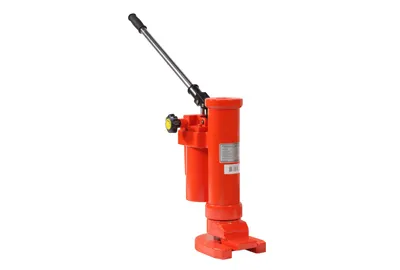
Air-powered jacks can lift a wide range of vehicles—from small cars to trucks and SUVs—with capacities often exceeding 3 to 10 tons, making them suitable for commercial and industrial use.
D. Ease of Use
Mechanics can lift vehicles with minimal physical strain, allowing staff to focus on repairs rather than manual effort. This efficiency is particularly valuable for high-volume workshops.
E. Long-Term Durability
Designed for repeated use, high-quality air-powered jacks—like those offered by JUCAI—feature reinforced cylinders and premium hydraulic seals, ensuring longevity even in high-demand environments.
Applications of Air Powered Jacks
Air-powered jacks are versatile tools widely used in automotive, industrial, and construction settings. Below are the most common applications:
A. Automotive Repair and Maintenance
Lifting cars, trucks, and SUVs for tire changes
Brake and suspension system repairs
Engine or undercarriage inspection
Alignment or wheel adjustments
B. Industrial Machinery Maintenance
Lifting heavy equipment for maintenance or relocation
Adjusting large components on assembly lines
Supporting machinery during repair operations
C. Construction Applications
Raising and aligning structural components
Positioning prefabricated modules or heavy equipment
Temporary support for equipment installation
JUCAI's air-powered jacks provide consistent, safe lifting in all these environments, helping mechanics, industrial teams, and contractors complete tasks faster and more efficiently.
Air Powered Jack vs Other Lifting Options
Choosing the right jack depends on vehicle type, lifting height, load capacity, and speed requirements. The table below highlights key differences between air-powered jacks, hydraulic bottle jacks, and floor jacks:
Feature | Air-Powered Jack | Hydraulic Bottle Jack | Floor Jack |
Power Source | Compressed air | Manual hydraulic pump | Manual hydraulic pump |
Lifting Speed | Fast | Moderate | Moderate to fast |
Ease of Use | Very easy, minimal effort | Requires manual pumping | Requires leverage and pumping |
Load Capacity | High (3–10+ tons) | High (2–50 tons) | Moderate to high (1–4 tons) |
Best For | Workshops, garages, heavy-duty vehicles | Trucks, industrial lifts | Low-profile cars, general repairs |
Portability | Moderate, requires air source | Compact and portable | Portable but heavier than bottle jack |
Stability | High | High | High |
Applications | Repetitive, commercial, industrial use | Heavy-duty lifting | Garage, low-clearance vehicles |
Key Takeaways:
Use air-powered jacks for high-volume, repetitive lifting in garages and workshops.
Choose bottle jacks for portable, heavy-duty lifting on trucks or construction sites.
Use floor jacks for low-profile vehicles, quick tire changes, or home garages.
JUCAI's air-powered jacks combine high lifting capacity, speed, and reliability, making them the preferred solution for professional mechanics and industrial operators.
Why Choose JUCAI Air-Powered Jacks?
JUCAI is renowned for its professional R&D capabilities, advanced manufacturing technology, and highly efficient service system. By providing durable, safe, and high-performance lifting equipment, JUCAI has become a trusted supplier for:
With JUCAI's products, you can ensure efficient, safe, and reliable vehicle lifting, whether in a high-volume garage or industrial setting.
References:
· OSHA Vehicle Lifting Safety Guidelines
· SAE International – Standards for Hydraulic and Pneumatic Equipment
· Engineering Toolbox – Hydraulic Systems Principles
· AutoLift Institute – Vehicle Lifting Safety Resources
 English