As warehouse operations grow more complex and space becomes increasingly limited, choosing the right forklift model has a direct impact on productivity, efficiency, and safety. Among the many options available today, the stand-up forklift has become the preferred choice for modern high-density warehouses, distribution centers, and logistics facilities.
This article explores what a stand-up forklift is, how it compares to sit-down models, its major benefits, and how to choose the right one for your operation.
What Is a Stand-Up Forklift?
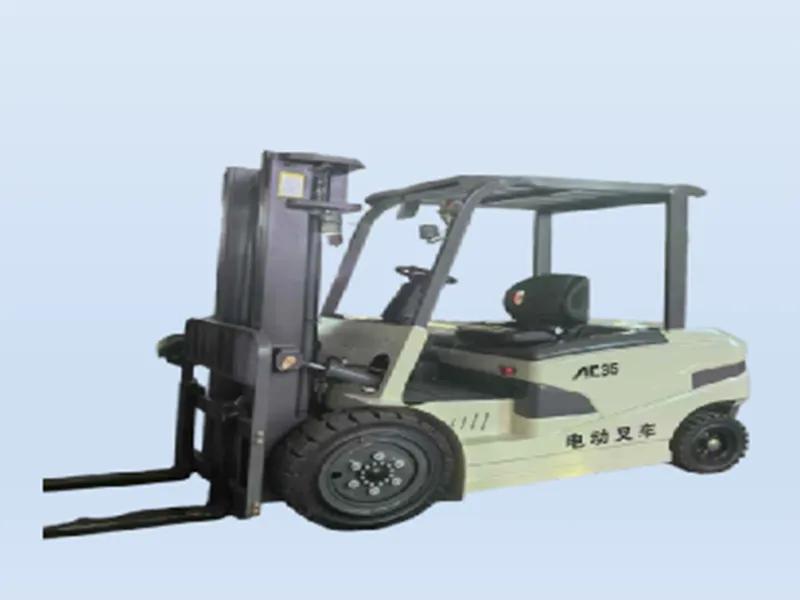
A stand-up forklift, also known as a stand-on forklift or stand-up counterbalance truck, is a type of lift truck designed for the operator to stand rather than sit during operation. It is most commonly used in:
Narrow-aisle warehouses
High-throughput distribution centers
Cold storage environments
Dock operations with frequent entry and exit
The standing operating position allows operators to move in and out of the forklift quickly, improving workflow in high-frequency tasks like loading, unloading, and shuttling pallets.
Key Characteristics of a Stand-Up Forklift
Compact chassis for tight spaces
Superior visibility from the operator compartment
Quick operator entry and exit
Designed for frequent directional changes
Typically powered by electricity (lead-acid or lithium batteries)
Because modern warehouses prioritize speed, maneuverability, and safety, the stand-up forklift fits naturally into environments where every second counts.
Stand-Up vs. Sit-Down Forklifts: Key Differences
Both stand-up and sit-down forklifts serve essential roles, but understanding their differences helps warehouses choose the best option for specific applications.
Comparison Table: Stand-Up vs. Sit-Down Forklifts
Feature / Factor | Stand-Up Forklift | Sit-Down Forklift |
Operator Position | Standing, open compartment | Seated, enclosed or semi-open cab |
Best For | Narrow aisles, fast-paced operations | Long travel distances, heavier loads |
Visibility | Excellent, wide field of view | Good, but obstructed in some angles |
Maneuverability | High — tight turning radius | Medium — requires more space |
Entry/Exit Speed | Very fast | Slower due to seat and restraints |
Operator Fatigue | Low in short-cycle tasks | Low in long-distance driving |
Training Requirement | Simple, often quicker to master | Standard forklift training |
Power Source | Primarily electric | Electric, LPG, or diesel |
Load Capacity | Medium | Medium to high |
Which Is Better?
Stand-up forklifts win in tight spaces, high-frequency movement, and short travel operations.
Sit-down forklifts win in long-distance hauling, heavy loads, and outdoor environments.
For most modern, high-density, indoor warehouses, the stand-up forklift is the superior choice, which explains its rise in popularity.
Advantages of Using Stand-Up Forklifts
The rapid growth of e-commerce, 24/7 distribution networks, and real-time logistics demands equipment that boosts productivity. Below are the reasons why the stand-up forklift has become indispensable in today's warehouse environments.
1. Optimized for Narrow Aisles and High Storage Density
Warehouse rental costs continue to rise globally, pushing companies to maximize vertical and horizontal storage.
Stand-up forklifts feature:
This makes them ideal for:
By reducing aisle width, warehouses can increase pallet positions by 15–25%, significantly improving storage efficiency.
2. Faster Workflow and Higher Productivity
Stand-up forklifts allow operators to step in and out quickly, which greatly benefits:
Studies have shown that operators can save 2–5 seconds per cycle compared with sit-down models. Over hundreds of cycles daily, this efficiency boost translates into measurable operational gains.
3. Better Visibility and Safety
The standing position provides operators with:
This is crucial in:
Congested warehouse aisles
Multi-traffic forklift environments
Facilities with heavy pedestrian movement
Combined with advanced safety features like stability control, enhanced braking systems, and ergonomic standing platforms, stand-up forklifts help significantly reduce workplace accidents.
4. Reduced Operator Fatigue in Short-Distance Tasks
Many people assume standing causes fatigue, but in short-cycle, stop-and-go tasks, standing is more comfortable than sitting.
Operators avoid:
Repeated buckling/unbuckling
Constant sitting and rising
Knee strain from climbing into the cabin
Standing also allows operators to maintain a natural position for quick scanning, maneuvering, and turning the machine.
5. Ideal for Multi-Task Environments
Stand-up forklifts are excellent for:
Operators who frequently get on/off
Fast-paced shipping areas
Mixed warehouse workflows
Combination loading–picking–transport tasks
Their versatility and operator-friendly design make them a top choice for environments where efficiency and speed are priorities.
How to Choose the Right Stand-Up Forklift for Your Warehouse
Selecting the best stand-up forklift requires evaluating your facility's operational needs.
Below are the most important factors to consider.
1. Warehouse Layout: Aisles, Racks & Turning Radius
Key questions:
How narrow are your aisles?
What is your average turning requirement?
Do you have blind corners or high-traffic zones?
If aisles are under 12–13 feet, a stand-up forklift is usually the best solution.
2. Load Requirements: Weight, Size & Lift Height
Consider:
Maximum lifting height
Standard pallet weights
Load center requirements
Most stand-up forklifts offer 2,000–5,000 lbs capacity—sufficient for most warehouse tasks.
3. Power System: Lead-Acid vs. Lithium Battery
Lithium batteries offer:
Lead-acid batteries offer:
Lower upfront cost
Well-established maintenance routines
Choose based on workload intensity and budget.
4. Operator Experience and Safety Requirements
Look for features such as:
These features not only improve safety but also reduce learning time for new operators.
5. Supplier Support, Customization & After-Sales Service
A reliable supplier ensures:
This is where JUCAI becomes a strong partner.
Why JUCAI Is a Trusted Supplier of Material Handling Equipment
JUCAI has earned industry-wide trust through:
Professional R&D capabilities
Advanced manufacturing technology
A high-efficiency service system
With deep expertise in lifting and material-handling equipment, JUCAI provides efficient, safe, and reliable solutions for:
Whether you need electric pallet trucks, hydraulic electric jacks, stand-up forklifts, or other lifting equipment, JUCAI is the ideal partner for long-term operational success.
FAQs
1. What is a stand-up forklift best used for?
Stand-up forklifts are best for narrow aisles, high-frequency pallet movement, and fast-paced warehouse operations, especially in indoor environments.
2. Are stand-up forklifts safer than sit-down models?
Both types can be safe, but stand-up forklifts provide better visibility and allow quicker operator escape during emergencies.
3. Should I choose electric or LPG for a stand-up forklift?
Most stand-up forklifts are electric, which is ideal for indoor air quality, low noise, and high maneuverability.
 English