When relocating heavy equipment, machinery, or structural loads, success depends on millimeter-level control — especially during lift, hold, and lowering stages. That is why hydraulic cylinders double acting systems are the standard choice for professional moving jobs: they provide powered control in both directions, enabling smoother, safer positioning throughout the operation. Combined with the right toe jack lift and moving skates, you can execute lifts and load transfers with a level of precision that single-acting or mechanical systems simply cannot match.
Toe Jack Lift Basics: Where Precision Matters Most
Typical Heavy Moving Scenarios
Every industrial relocation project has at least one moment where the available clearance is the constraint — not the weight. Machinery with low-profile bases, presses sitting directly on floor pads, and transformers with minimal ground clearance all require a lifting tool that can work in the space that exists rather than the space you wish you had.
This is exactly where the toe jack lift earns its place on the jobsite.
| Application | Why Toe Jack Fits | Alternative Limitation |
|---|
| CNC machine relocation | Low baseplate clearance; fragile feet | Standard bottle jack cannot fit under the toe |
| Hydraulic press repositioning | Heavy, low-to-ground, off-center load | Overhead lift not always available |
| Transformer installation | Precise positioning required; limited clearance | Pry bars create uncontrolled load shift |
| Industrial pump or motor base | Narrow toe point for initial lift | Floor jack too wide for access |
| Structural load leveling | Fine adjustment needed during shimming | Fixed-height block cannot micro-adjust |
The Function of the Toe Jack
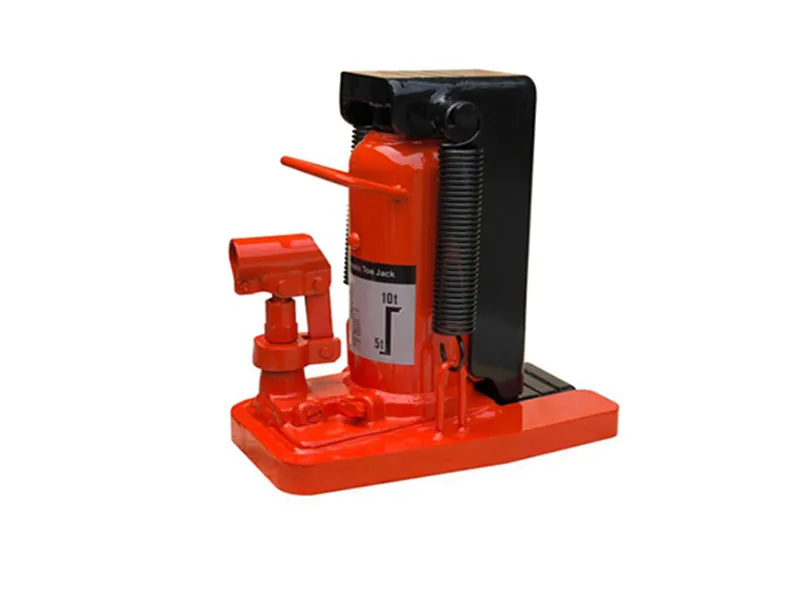
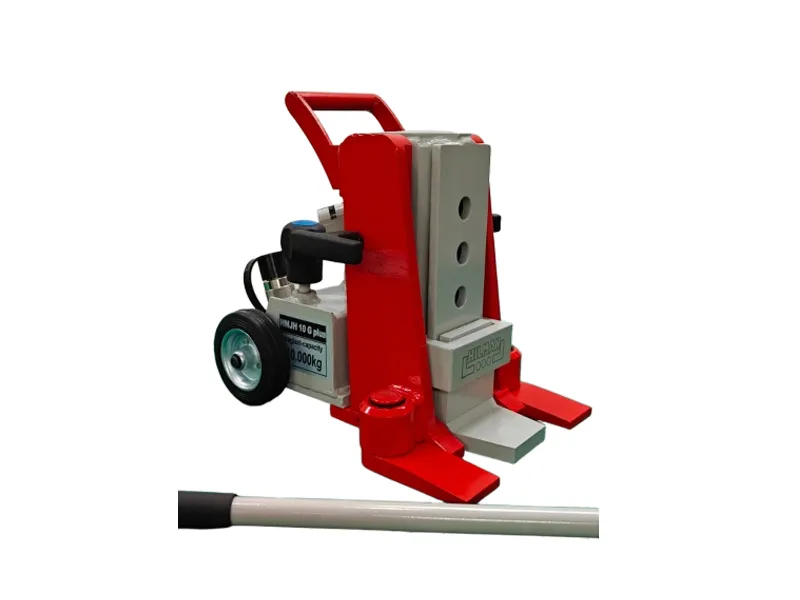
A toe jack is a hydraulic jack with a low-profile "toe" — a horizontal platform at the base that slides under loads with as little as 10–20 mm of ground clearance. The initial vertical lift from the toe creates just enough clearance to insert moving skates, blocking, or shim plates beneath the load.
Key risk points to manage:
Uneven loads where the center of gravity shifts as lift height increases
Floor slopes that cause load drift once clearance is achieved
Pinch points at the toe entry zone during initial insertion
Inadequate cribbing if the jack is to be held under load for extended periods
Hydraulic Cylinders Double Acting: Controlled Lift and Controlled Lowering
What Double Acting Means
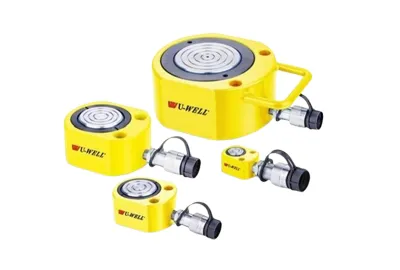
A double acting hydraulic cylinder uses hydraulic pressure for both the extension (lift) and retraction (lower) strokes. Oil is directed to either side of the piston through a control valve — meaning the operator commands the movement in both directions rather than relying on gravity or spring return for the retraction phase.
Why It Matters Compared to Single-Acting Systems
| Characteristic | Double Acting Cylinder | Single Acting Cylinder |
|---|
| Extension control | Pressure-driven — proportional to valve input | Pressure-driven |
| Retraction control | Pressure-driven — operator controls speed | Gravity or spring — speed less controlled |
| Lowering precision | Controlled inch-by-inch lowering under full load | Can drop suddenly if valve is opened too far |
| Fine positioning | Both directions available for micro-adjustment | Only one direction powered; reverse requires gravity |
| Load holding | Valve closed holds position in both directions | Same — but retraction adjustment limited |
| Application fit | Critical positioning, alignment, synchronization | Simpler lifts where retraction precision is not required |
The Practical Advantage for Moving Projects
The controlled retraction of a double acting system is what makes it the professional's choice for precision work. When lowering a machine onto a prepared baseplate, or when inching a load into alignment during a leveling operation, the ability to retract the cylinder in a controlled, pressure-driven manner — rather than opening a valve and letting gravity decide — is what separates a clean installation from a costly correction.
Fine positioning applications where this matters most:
Lowering a machine onto anchor bolts during final placement
Leveling a base frame across multiple jack points simultaneously
Holding position while shims are fitted, then micro-lowering to transfer load
Toe Jack Lift and Double-Acting Control: Reducing Load Shift, Damage, and Downtime
How Controlled Hydraulics Protect the Load and the Site
The most common damage events in industrial relocation happen at two moments: when the load first leaves the floor (if the lift is sudden or uneven), and when the load is lowered onto its final position (if the descent is too fast or poorly controlled).
Both risks are directly addressed by combining a toe jack lift with double acting hydraulic control.
| Risk Event | Cause | How Double Acting Control Reduces It |
|---|
| Sudden load drop on lowering | Single acting gravity return releases too fast | Pressure-controlled retraction prevents gravity-driven drop |
| Micro-slip during hold | Load shifts while jacks are static | Double acting locks position in both directions |
| Bounce on set-down | Load hits surface without controlled contact | Metered retraction allows soft, controlled final contact |
| Misalignment during placement | Load drifts before shims or bolts are set | Controlled inch-by-inch lowering allows real-time correction |
| Machine foot or baseplate damage | Hard contact with mounting surface | Controlled final descent eliminates impact loading |
Protection Benefits
Machine feet and anchor lugs are protected from impact damage during final placement
Floor surfaces and grout pads are not subjected to shock loading from uncontrolled drops
Structural members of the load itself experience less dynamic stress from sudden movement
Surrounding equipment and personnel are at lower risk from unexpected load movement
Workflow Example
A typical heavy machine relocation using this system approach follows this sequence:
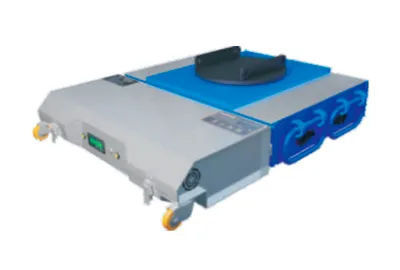
Insert toe jack under machine toe point — lift 50–80 mm to create working clearance — insert structure moving skates under load footprint — lower load onto skates using controlled double acting retraction — travel load along planned path using skates — re-insert toe jack at destination — lift off skates — place blocking and shim — lower onto final position with controlled retraction — verify level and alignment — remove jacks.
Every lift and lower stage in this sequence benefits from double acting hydraulic control.
Hydraulic Cylinders Double Acting in Practice: The System Approach
Combining Toe Jack, Moving Skates, and Double Acting Hydraulics
No single piece of equipment solves a heavy relocation project. The professional approach treats the lift, travel, and placement phases as a coordinated system — and each phase has a tool matched to its demands.
| Phase | Primary Tool | Role of Double Acting Hydraulics |
|---|
| Initial lift | Toe jack lift | Controlled lift from floor clearance to working height |
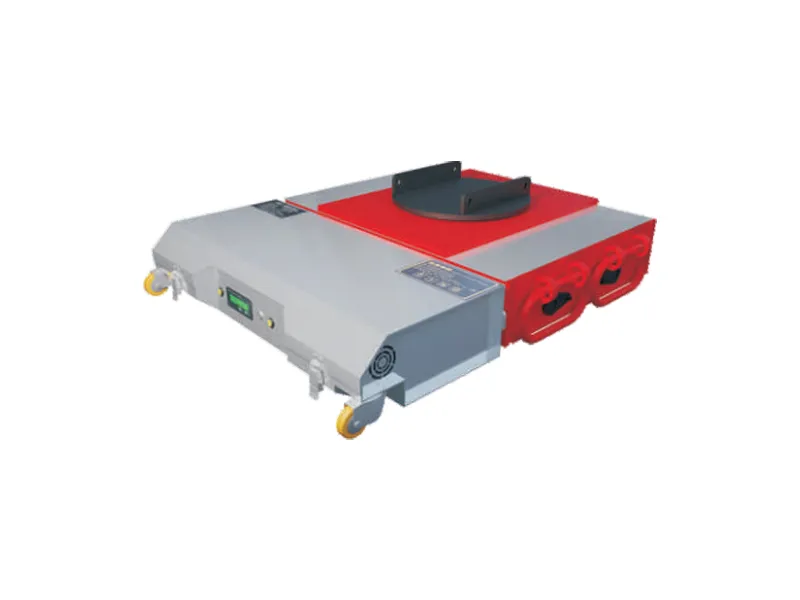
| Skate insertion | Structure moving skates | Positioned under load after toe jack creates clearance |
| Horizontal travel | Moving skates | Load travels on skates; jacks not under load |
| Position correction | Hydraulic cylinders | Fine lateral or rotational adjustment at destination |
| Final placement | Toe jack with double acting control | Controlled lowering onto baseplate, pads, or anchor bolts |
| Leveling | Multiple synchronized jacks | Simultaneous controlled retraction across multiple points |
Jobsite Checks Before Starting
Floor condition: confirm floor can support concentrated point loads at jack positions
Load distribution: calculate jack load at each lift point; confirm all points are within rated capacity
Travel path: inspect for floor joints, drains, elevation changes, and obstacles that affect skate travel
Turning radius: confirm skate steering capability matches any directional changes required
Overhead clearance: confirm lift height does not conflict with ceiling, pipes, or overhead structures
Toe Jack Lift Buying Checklist: Specs to Confirm Before You Move Anything
Key Specifications to Define
| Specification | What to Define | Why It Matters |
|---|
| Toe rated capacity | Maximum load at the toe position in tonnes | Toe rating is lower than head rating; do not confuse the two |
| Head rated capacity | Maximum load at the head position | Used for higher-clearance lifting once toe has created initial gap |
| Minimum toe height | Clearance required to insert the toe | Critical spec for low-profile machinery; confirm against actual clearance |
| Total stroke | Maximum lift height from minimum to maximum | Must be sufficient to insert skates or blocking |
| Base dimensions | Footprint of the jack at floor level | Must fit within available floor area near the load |
| Pump type | Hand pump, foot pump, or hydraulic power unit connection | Affects speed and operator fatigue on long operations |
| Safety valve | Internal overload protection | Prevents exceeding rated capacity without operator awareness |
Operational Safety Rules
Never use toe capacity rating for a load that exceeds the toe-rated limit — use the head position for higher loads
Place cribbing or blocking alongside the jack whenever the load will be held in position for more than a short period
Plan the controlled lowering sequence before starting the lift — do not improvise the descent
Use a minimum of two lift points for all but the simplest symmetrical loads
Confirm the load is stable on skates before removing the toe jack from the lift position
Conclusion
Heavy moving is rarely about raw force — it is about control at every stage. Using hydraulic cylinders double acting systems gives lifting teams powered precision in both directions, reducing the risk of sudden drops, load shift, and positional error during critical alignment moments. Combined with the right toe jack lift for initial clearance and structure moving skates for horizontal travel, you can execute lifts and load transfers more predictably, more safely, and with significantly less risk to the machine, the floor, and the people involved.
FAQ
Q1: What is the advantage of hydraulic cylinders double acting for heavy moving projects?
Double acting cylinders provide powered control during both extension and retraction — meaning the operator commands the speed and distance of lowering rather than relying on gravity. This enables millimeter-level positioning during final placement, controlled lowering onto baseplates and anchor bolts, and synchronized multi-point lowering without sudden drops or load shift.
Q2: What is a toe jack lift used for in rigging and relocation?
A toe jack is used to lift loads with very low ground clearance — typically 10–20 mm minimum — by inserting a low-profile horizontal toe under the edge of the machine or baseplate. The lift creates just enough clearance to insert moving skates, blocking, or shim plates, which is the first step in most machinery relocation workflows.
Q3: Can a toe jack be used to move a load horizontally?
Toe jacks are designed for vertical lifting only. Horizontal movement is performed using structure moving skates or rollers after the toe jack has created sufficient clearance beneath the load. Using a jack to apply horizontal force to a load risks tipping, slipping, and jack damage.
Q4: What causes loads to shift during lifting and lowering?
The most common causes are uneven floor surfaces that cause the jack to tilt under load, off-center load distribution that shifts the center of gravity as lift height increases, sudden valve opening during lowering that releases load too quickly, poor synchronization across multiple jack points, and inadequate cribbing that allows the load to rock when the jack is extended.
Q5: How do I choose the right toe jack lift capacity for my application?
Use the manufacturer's rated toe capacity — not the head capacity, which is a higher rating for a different lift position. Calculate the actual load at each jack point based on load weight and center of gravity position, not just total load divided by number of jacks. Apply a safety margin of at least 20–25% above calculated load per point, and confirm that the minimum toe height of the jack is achievable given the actual clearance beneath your load.
 English