For many contractors, equipment ROI is not just about purchase price — it is about uptime, total cost of ownership, jobsite flexibility, and how fast an asset pays for itself. That is why used cranes are increasingly attractive for construction firms looking to expand lifting capacity without locking up cash flow. And when the job requires careful indoor positioning after the lift is complete, pairing crane capacity with an air cushion vehicle for sale creates a complete, lower-risk heavy-move solution that neither tool delivers alone.
Air Cushion Vehicle for Sale: When Contractors Need More Than a Lift
Why Crane Work Often Needs Move-and-Place, Not Just Lift
A crane lifts a load vertically and sets it down — but many industrial and construction scenarios require precise horizontal positioning after the set-down, often on finished floors, sensitive surfaces, or in tight indoor spaces where wheels or rollers would cause damage or lack the maneuverability required.
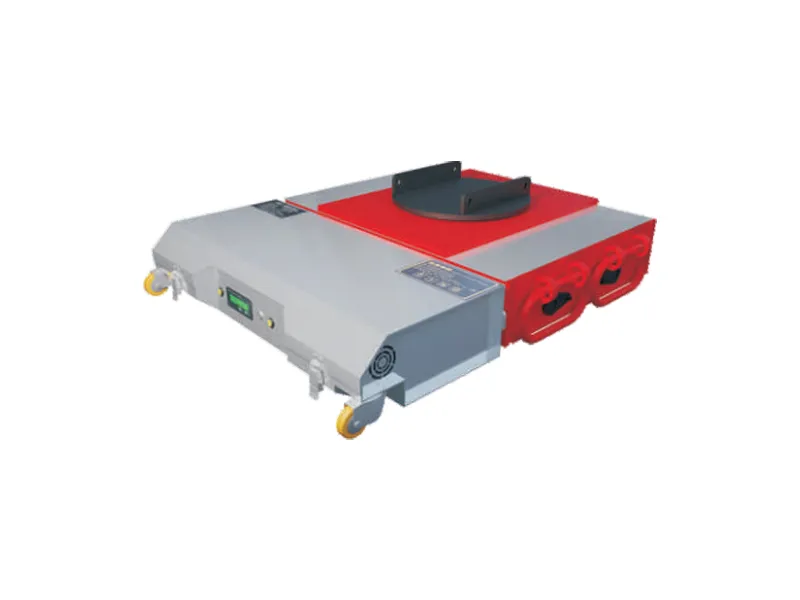
This is the application gap that an air cushion vehicle fills.
| Scenario | Why Standard Movement Fails | Where Air Cushion Vehicle Fits |
|---|
| Transformer installation in a substation | Rubber wheels create unacceptable floor load concentration | Air cushion distributes load over full pad area |
| Industrial press relocation inside a plant | Forklift cannot access; floor is polished or coated | Air cushion moves without surface damage |
| Large HVAC unit placement in a completed building | Corridors too narrow for wheeled transport | Air cushion turns in its own footprint |
| Module positioning in a clean room or data center | No floor penetration or marking allowed | Air cushion floats on air film with minimal contact |
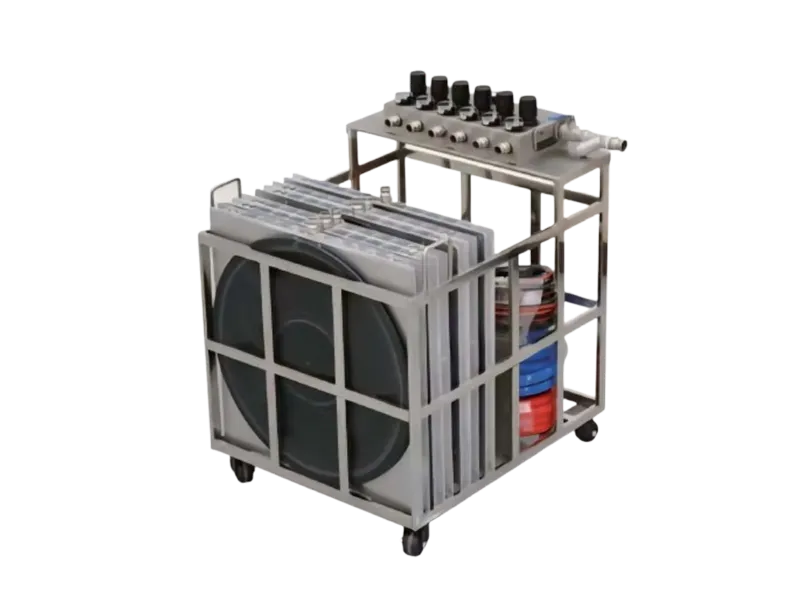
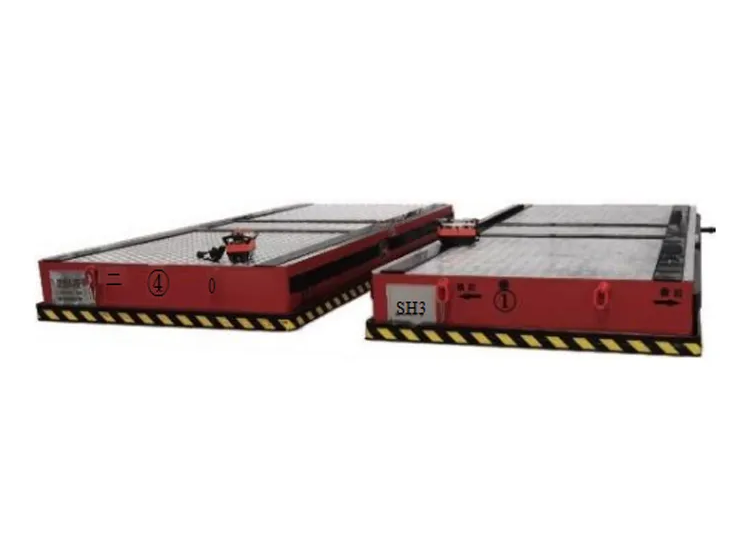
Air cushion vehicles work by creating a thin film of pressurized air between the load platform and the floor surface, reducing friction to near zero and distributing the load weight uniformly across the pad area. This enables loads of hundreds of tonnes to be moved on floors that would be destroyed by conventional wheeled transport.
Used Cranes ROI: Lower Depreciation and Faster Payback
Why Depreciation Is the Key Variable
A new crane depreciates most steeply in its first three to five years of service. A buyer who purchases a used crane that has already passed through that initial depreciation curve acquires most of the operational capability at a fraction of the replacement cost — and faces a significantly slower depreciation rate going forward.
ROI Framework for Used vs. New Crane Acquisition
| Cost Factor | New Crane | Used Crane |
|---|
| Purchase price | Full market price | Typically 40–65% of new equivalent |
| Year 1–3 depreciation | Steepest — highest value loss | Already past peak depreciation |
| Refurbishment cost | Minimal | Variable — factor into purchase decision |
| Maintenance cost | Lower initially | Slightly higher — offset by purchase price saving |
| Break-even per job | Longer — higher cost to recover | Faster — lower cost basis |
| Financing impact | Higher monthly payments | Lower financing burden |
When Used Cranes Make the Most Sense
Project-based demand where the crane is needed for a defined period rather than continuous fleet use
Seasonal workload patterns where full-year utilization of a new unit is not achievable
Fleet expansion where the primary units are new and the pre-owned unit provides overflow or backup capacity
Specific tonnage or class requirements that match available used inventory exactly
A simplified ROI calculation: purchase price plus refurbishment plus annual maintenance, divided by annual utilization days multiplied by average day rate, equals payback period in years. For a well-selected used crane at 60% of new cost and similar utilization, payback is typically 30–40% faster than the new unit equivalent.
Used Cranes Risk Management: Inspection, Service Records, and Compliance
The Due Diligence Checklist
The difference between a well-selected used crane and a costly maintenance liability is the quality of pre-purchase inspection. Every used crane acquisition should go through a structured evaluation before any deposit is placed.
Structural and Mechanical Inspection
| Inspection Area | What to Check | Red Flag |
|---|
| Boom sections | Cracks, bends, corrosion, pin hole wear | Any visible crack or deformation in boom chord |
| Wire ropes | Broken wires, kinking, corrosion, end terminations | More than 10% broken wires in any strand |
| Hydraulic system | Cylinder seals, hose condition, pump pressure, valve response | Active leaks; slow or jerky cylinder response |
| Outriggers | Beam extension and retraction, pad condition, locking mechanism | Slop in beam guides; pad cracking |
| Slew ring | Bearing wear, backlash, gear condition | Excessive play; visible pitting or spalling |
| Undercarriage | Travel drive condition, track or tyre wear, steering | Unusual noise in travel; excessive tyre wear |
Documentation to Request
Serial number and manufacturer's records confirming configuration
Service history and maintenance log — hour or mileage-based records
Load charts for all boom and jib configurations
Most recent third-party structural inspection or certification
Operator manual and parts book confirmation
Safety and Compliance Requirements
Used cranes typically require re-certification or inspection before entering service in a new jurisdiction. Confirm:
Local crane inspection and certification requirements for your site and work type
Whether the crane requires a load test before first lift after ownership transfer
Operator certification requirements for the specific crane class
Documentation package required by your insurer for equipment coverage
Require a pre-delivery functional test — witnessed if possible — that confirms all functions operate to specification before the crane leaves the seller's yard.
Used Cranes vs. New: Availability, Lead Times, and Fleet Flexibility
The Delivery Timeline Advantage
New crane orders from major manufacturers can carry lead times of six to eighteen months depending on class, specification, and current order book. For a contractor who wins a project with a 90-day mobilization window, a new crane ordered at contract signature will not arrive in time.
Used cranes are typically available for delivery within two to eight weeks of purchase agreement — sometimes faster if the unit is already in the buyer's region. This availability advantage is not marginal; it is often the deciding factor for project-driven equipment decisions.
Fleet Strategy: Mixing New and Used
| Fleet Role | Recommended Asset Type | Rationale |
|---|
| Core, high-utilization fleet units | New | Warranty coverage; predictable maintenance; full lifecycle planning |
| Capacity expansion for growth | Used | Faster delivery; lower capital commitment; validate demand before full investment |
| Backup and standby coverage | Used | Minimizes risk of primary unit downtime without full new-unit investment |
| Specialized class for specific job | Used | Match exact requirement from available inventory |
| Short-term project requirement | Used or rental | Avoid depreciation on low-utilization asset |
Air Cushion Vehicle for Sale and Used Cranes: Building a Complete Heavy-Move Toolkit
The System Approach for Contractors
| Phase | Tool | Capability |
|---|
| Vertical lift from source position | Used crane | Full rated lift capacity; boom reach and height |
| Set-down onto temporary surface | Used crane plus cribbing | Controlled lowering to prepared set-down point |
| Horizontal transport to final position | Air cushion vehicle | Low floor load; sensitive surface protection; tight maneuvering |
| Final alignment and micro-positioning | Air cushion vehicle with steering control | Millimeter-level position adjustment in any direction |
High-Value Use Cases
Transformer installation in substations with finished concrete floors and tight access corridors
Industrial press relocation inside production plants
Large HVAC unit installation in completed commercial buildings
Generator set placement in data centers or hospitals where floor loading limits exclude conventional transport
Buying Considerations for Air Cushion Vehicles
| Factor | What to Define | Why It Matters |
|---|
| Load capacity | Tonnes per pad or total system capacity | Must exceed load weight with appropriate safety factor |
| Floor condition requirement | Smooth, level surface minimum | Gaps or debris compromise air film |
| Air supply requirement | CFM and pressure from compressor | Requires on-site compressed air at defined specification |
| Steering system | Manual, hydraulic, or powered steering module | Determines maneuverability in tight spaces |
| Turning capability | Omni-directional or linear travel | Omni-directional enables placement without pre-aligned approach |
Conclusion
Choosing between new and used cranes is a utilization and cash-flow decision — and for many construction firms, pre-owned units deliver faster payback, quicker availability, and more fleet flexibility than waiting for new production. The key is structured pre-purchase inspection, clear compliance planning, and matching the used asset to the specific lifting requirement it will serve.
When the lift is complete, pairing crane capacity with an air cushion vehicle for sale creates a complete heavy-move toolkit that protects sensitive floors, enables tight indoor positioning, and reduces damage risk at the most critical stage of any placement job.
FAQ
Q1: Are used cranes reliable for construction projects?
Yes, when the purchase is backed by structured due diligence. Verify service records and maintenance history, conduct a full mechanical and structural inspection covering boom, wire ropes, hydraulics, outriggers, and slew ring, confirm the documentation package meets your local certification requirements, and require a pre-delivery functional test before the unit leaves the seller's yard.
Q2: What should I inspect first when evaluating used cranes?
Prioritize structural integrity of boom sections, wire rope condition, hydraulic system performance, outrigger extension and locking mechanism, and slew ring bearing condition. These are the areas where wear or damage most directly affects lifting safety and operational reliability.
Q3: Why do used cranes often offer better ROI than new equipment?
The primary driver is depreciation. A new crane loses the most value in its first three to five years. Buying a used crane that has passed through that period means acquiring most of the operational capability at 40–65% of new cost, with a significantly slower depreciation rate going forward. Combined with faster delivery and lower financing burden, the payback period is typically 30–40% shorter than a comparable new acquisition.
Q4: What is an air cushion vehicle used for in construction and industrial projects?
An air cushion vehicle is used to move heavy loads with extremely low floor pressure and precise maneuverability — typically indoors or on sensitive surfaces where wheeled transport would cause damage or cannot access the space. The vehicle floats on a thin film of pressurized air, distributing load weight uniformly and reducing friction to near zero.
Q5: Should contractors buy new or used cranes for fleet expansion?
Most well-managed fleets use a deliberate combination. New cranes suit high-utilization core fleet units where warranty coverage and predictable maintenance are priorities. Used cranes are well-suited to capacity expansion, backup coverage, project-specific requirements, and situations where fast delivery is critical. Matching asset type to utilization role delivers the best overall fleet economics.
 English