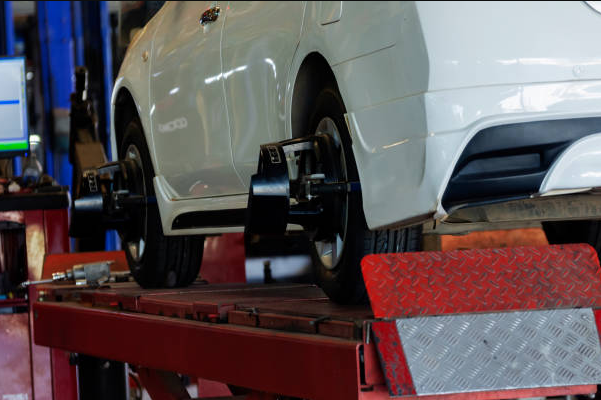
The machine is on the floor. The shutdown window is four hours. The floor coating cost $80,000 last year.
And someone just suggested pushing it with a forklift.
In 2026, plant relocations and equipment moves are happening under conditions that make improvised solutions genuinely expensive: tighter maintenance windows, rising floor repair costs, and safety requirements that treat near-misses as recordable events. A hydraulic jack gets the load off the floor—but without the right machinery skates, the move fails at the next step: unstable rolling, overloaded wheels, no steering control, and a 12-tonne CNC machine heading slowly toward a column.
This guide shows how to match the lift to the rolling platform, when an outdoor electric pallet truck becomes the better tool for part of the move, and what to specify so you get an accurate quote the first time.
How a Hydraulic Jack Works in a Safe Moving Plan—and What Skates Add
The Lift Is Only the Beginning
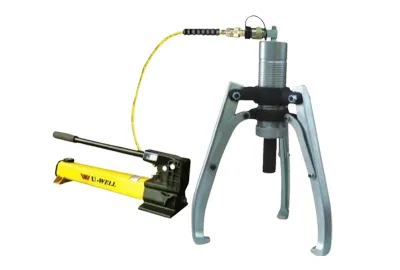
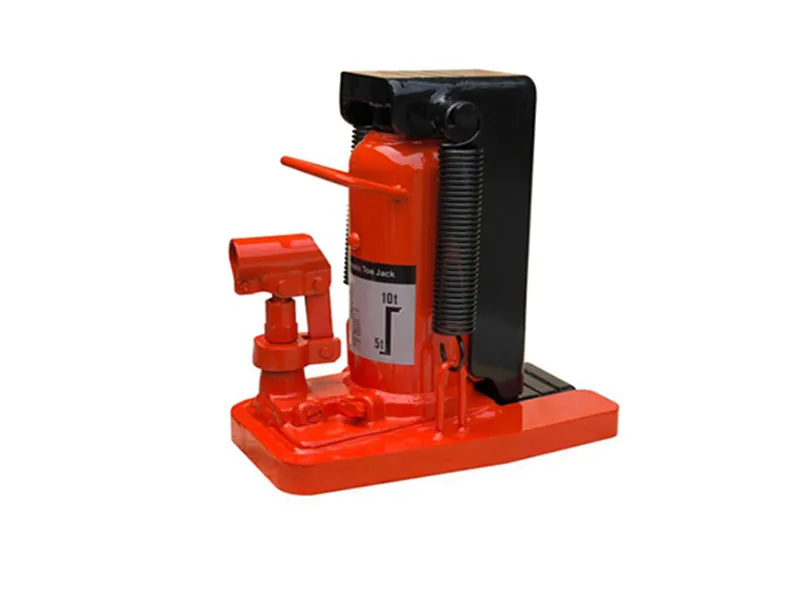
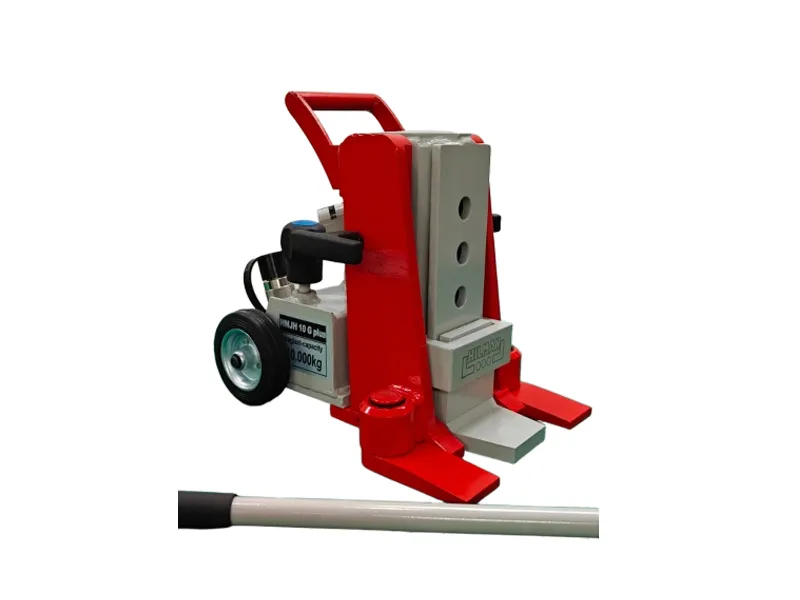
A hydraulic jack performs one function with precision: it converts hydraulic pressure into controlled vertical force, raising the load to a defined height at a defined rate. This is the indispensable first step—without clearance under the machine base, nothing else is possible.
But lift height and rolling are separate problems. A hydraulic jack that has raised a 15-tonne transformer 80mm has created an opportunity, not a solution. The load is now suspended. What happens next—how that load is transferred to a rolling platform and moved through a facility—determines whether the move is controlled or dangerous.
What Machinery Skates Solve
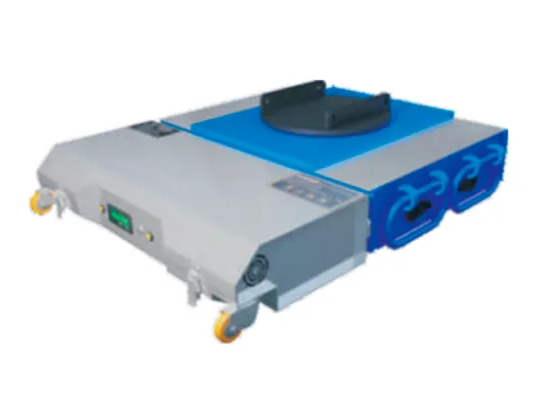
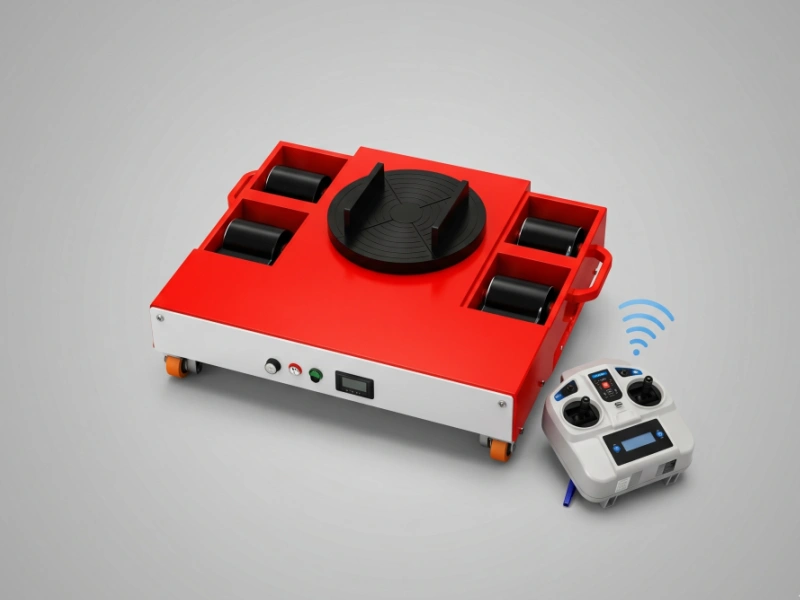
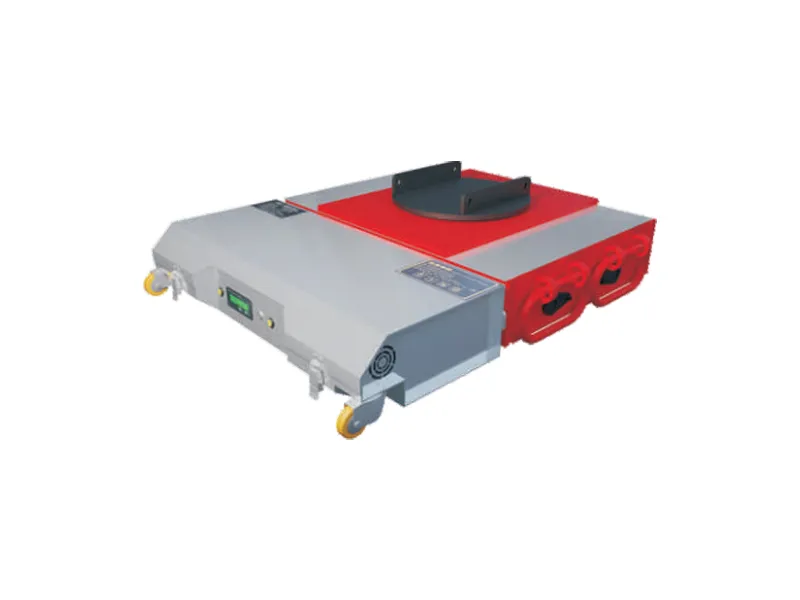
Machinery skates convert the lift clearance into a stable, low-friction rolling platform with defined load distribution. A correctly configured skate set:
Distributes the load across multiple wheel contact points rather than concentrating it at jack pad locations
Provides a rolling surface with predictable friction characteristics matched to the floor type
Creates a defined and stable base geometry that aligns with the machine's center of gravity
Allows directional control through a steerable unit that prevents uncontrolled drift
The hydraulic jack and the skate set are a system—neither component delivers a safe move without the other being correctly specified.
Common Failure Points to Design Out
Point loading and floor damage A skate set with too few wheels, or wheels too small for the load, concentrates force into high-pressure contact zones that crack concrete, chip epoxy coatings, and compress soft flooring. Load must be distributed across a sufficient contact area to stay within the floor's rated bearing capacity.
Wrong wheel material Nylon wheels are hard and have low rolling resistance—they are appropriate for smooth concrete and hard floors but can crack or chip at floor joints and over debris. Polyurethane (PU) wheels are softer, absorb floor imperfections, and protect sensitive floor coatings. Steel wheels are used for rough outdoor surfaces and heavy industrial applications where floor protection is not required. Selecting wheel material for the actual floor type is not optional.
No steering solution A set of four fixed skates will travel in a straight line. A real facility move requires turns, adjustments, and precise final positioning. Without a steerable skate or turntable top, the only steering mechanism is manual repositioning—which means repeatedly removing the skates, adjusting position, and re-inserting them, creating multiple opportunities for load instability.
Under-rated capacity Sizing the skate set to the total machine weight divided by four skates is not sufficient. Each skate must be rated to handle the maximum load it will carry when the center of gravity is not centered between all skate positions—which is almost always the case with real machinery.
Hydraulic Jack + Skates Spec Checklist
Provide these parameters when requesting a recommendation to avoid specification gaps that produce unsafe equipment selections.
Load Data
| Parameter | What to Define | Why It Matters |
|---|
| Total machine weight | kg or tonnes, including all attachments | Determines total capacity requirement |
| Center of gravity (COG) | Position relative to machine base footprint | Determines per-skate load distribution |
| Machine base footprint | Length × width | Determines skate placement geometry |
| Lifting points | Location and structure of accessible lift points | Determines jack placement and required lift height |
Lift Height and Configuration
Required lift height: minimum clearance to insert skates (typically 75–100mm) plus additional height to clear floor joints or ramps along the route
Jack stroke requirement: confirm the hydraulic jack stroke length is sufficient for the required lift without approaching the jack's fully extended instability limit
Number of jacks: for large footprint machines, simultaneous multi-point jacking may be required to maintain level during lift
Skate Configuration
Fixed skates: three or more fixed skates provide stable load support
Steerable skate: minimum one steerable or turntable-top skate per set for directional control; position at the leading edge of the move
Turntable top: allows the load to rotate on the skate without skate repositioning—essential for tight-space final positioning
Capacity Rating
Per-skate capacity must be calculated from the actual load distribution at the COG position—not from total weight divided by skate count. For a machine with a COG offset toward one end, the skates at that end will carry significantly more than their proportional share of the total weight.
Apply a minimum 2:1 safety factor over the calculated per-skate load for dynamic load increases during movement over floor imperfections.
Wheel Type and Floor Match
| Floor Type | Recommended Wheel | Avoid |
|---|
| Polished concrete / hard smooth | Nylon or PU | Steel (marks surface) |
| Epoxy coated | PU | Nylon (can chip coating at joints) |
| Rough concrete / yard | Steel or hard nylon | PU (wears rapidly) |
| Outdoor surfaces | Steel | PU or nylon (outdoor debris damage) |
Route Conditions
Maximum slope on the route: slopes require mechanical load retention (chains, come-alongs) to prevent runaway; confirm the skate's load retention capacity on the slope
Expansion joints and floor transitions: wheel diameter must be sufficient to bridge the widest joint without dropping into it
Turning radius constraints: minimum turning radius achievable with the skate configuration must fit the tightest turn on the route
Indoor-to-outdoor transitions: if the move crosses from floor to outdoor surface, either the skate configuration changes at the transition or an outdoor electric pallet truck takes over for the outdoor segment
When an Outdoor Electric Pallet Truck Is the Better Choice
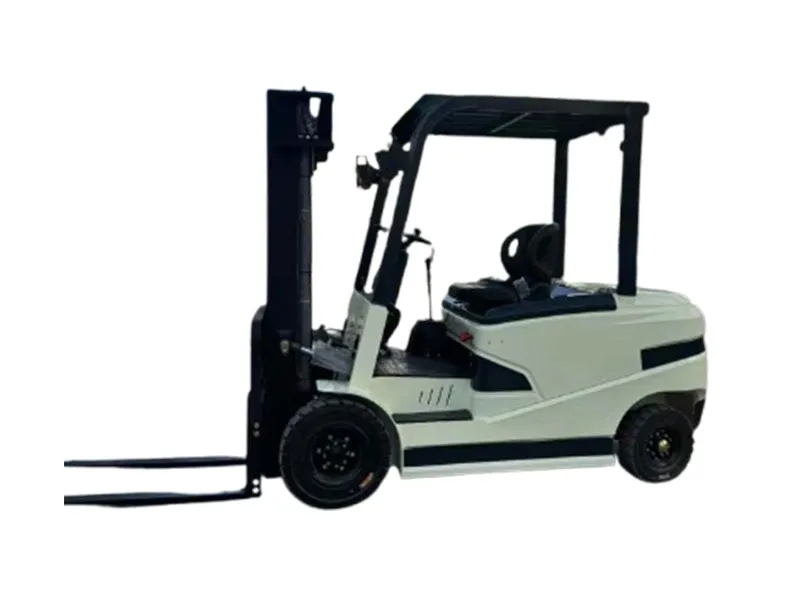
The hydraulic jack and skate combination is optimized for precision positioning under machinery with complex geometry and tight clearances. When the move transitions to longer distances or palletized loads, an outdoor electric pallet truck often delivers better productivity and safer operator ergonomics.
Best-Fit Conditions for an Outdoor Electric Pallet Truck
Loads on pallets or adaptable to palletization: the outdoor electric pallet truck is designed for pallet entry and standard pallet geometry—it is not appropriate for machinery with irregular bases or unusual COG positions
Longer travel distances: powered travel reduces operator fatigue and improves speed for moves covering 50m or more, including yard and dock-to-facility transfers
Outdoor surfaces and ramps: outdoor electric pallet truck models with appropriate tire specification handle outdoor yards, compacted gravel, and loading ramps that indoor skates cannot navigate
Not the Right Tool When
The load is top-heavy machinery where pallet truck mast tilt creates COG instability
Micro-positioning in tight installation areas is required (skates allow millimeter-by-millimeter adjustment that a pallet truck cannot replicate)
The machine base has no accessible pallet entry points and cannot be safely positioned on a pallet
The Practical Combined Approach
For moves that include both precision indoor positioning and outdoor travel:
Hydraulic jack + skates for the indoor lift, precision positioning, and tight-space moves
Transfer to outdoor electric pallet truck at the indoor/outdoor boundary for yard transport
Return to hydraulic jack + skates for final indoor placement
This combined approach uses each tool at its point of highest competence and avoids forcing either tool into conditions it was not designed for.
Applications Where the Right Setup Pays Off Fast
Machine Tool Relocation
CNC machining centers, presses, and injection molding machines combine high weight, precision base geometry, and floor-area limitations that make skate-based moves the only practical approach in most plant layouts. The COG of these machines is often high relative to the base footprint—making correct per-skate load calculation and steerable positioning critical for stability during movement.
Plant Maintenance: Transformers, Generators, Chillers
Electrical and mechanical plant maintenance moves are typically infrequent but time-critical—they happen during planned shutdowns with fixed end times. Equipment that is ready, correctly rated, and matched to the specific machine reduces setup time and eliminates the improvised solutions (wrong-rated jacks, wrong-wheel skates) that cause incidents and floor damage during these events.
Warehouse Line Installations
Conveyor sections, packaging line modules, and robotics cells arrive on trucks, transfer to the facility floor, and must be positioned with millimeter accuracy against fixed reference points. The hydraulic jack + skate combination provides the lift, the transport, and the final micro-positioning that crane and forklift approaches cannot achieve in these tight-tolerance installations.
Outdoor-to-Indoor Moves
Equipment arriving by truck in the yard, needing to be moved across the yard and installed on a facility floor, represents the clearest combined-approach application: outdoor electric pallet truck for yard transport, hydraulic jack + indoor skates for final placement. Planning the transition point between the two tools—at the facility threshold, where the outdoor surface meets the finished floor—is the key operational decision.
Installation, Handling, and TCO—Safer Moves with Fewer Floor Repairs
Pre-Move Planning
A move that begins with a route survey and a written plan takes 30 minutes longer to start and significantly less time to complete than one that begins with equipment in position and no prior assessment.
Route survey checklist:
Setup Sequence
Position hydraulic jack at confirmed lifting point; install cribbing/blocking adjacent to jack for emergency lowering
Lift one end to skate insertion height; insert skates at confirmed positions aligned to COG calculation
Lower load onto skates; verify load distribution by checking skate plate contact at all positions
Repeat for second end
Insert steerable skate at leading position; perform steering test (full left, full right, straight) before load travel begins
Assign spotters; confirm communication protocol before travel begins
Maintenance Schedule
Post-use inspection (after each major move)
Wheel condition: flat spots, cracking, chunking at edges
Bearing condition: resistance to rotation, noise, lateral play
Bolt torque: deck-to-frame fasteners and wheel axle retention
Structural check: frame cracks, weld integrity, deck plate deformation
Periodic maintenance
Lubrication: turntable bearings and wheel axles at defined intervals
Corrosion protection: cleaning and treatment for skates stored outdoors or in damp environments
Capacity re-verification: per-skate rating confirmation after any repair or modification
TCO Model
| Cost Factor | Poor Equipment Match | Correct Equipment Match |
|---|
| Floor damage per move | High—wrong wheel type for floor | Low—PU or nylon matched to floor |
| Move time per machine | Long—multiple repositioning events | Short—steerable configuration |
| Crew size | Large—manual steering requires more spotters | Smaller—controlled steering reduces crew |
| Incident frequency | Higher—unstable loads, wheel failures | Lower—rated equipment correctly applied |
| Equipment life | Shorter—overloaded bearings | Longer—capacity matched to application |
For a facility performing 10–15 major machine moves per year, the difference between an improvised and a correctly specified hydraulic jack and skate setup typically represents one avoided floor repair event and two to three hours saved per move—both of which have clear financial values that exceed the equipment investment within the first operating year.
Conclusion
A hydraulic jack is the first half of a safe machine move. The right machinery skates—matched to the load weight, COG, floor type, and route conditions—are the second half that converts a lift into a controlled move that protects people, equipment, and facilities.
For moves that include outdoor travel or palletized loads, an outdoor electric pallet truck at the appropriate segment of the route improves productivity and reduces manual handling risk. The practical approach is to match each tool to its optimal application within the same move—not to force one tool to cover the full scope.
The right configuration starts with a complete load and route specification. Provide those parameters and the matched skate set, jack selection, and any pallet truck recommendation follows directly from the technical requirements.
Ready to Get a Matched Configuration and Quote?
Visit the product page and submit your operating conditions, quantity, size or specifications, target performance indicators, and current problems to receive a matched selection and pricing:
FAQ
Q1: What are machinery skates and how do they work with a hydraulic jack?
Machinery skates are low-profile heavy-duty load movers with rated wheels and a load deck designed to support machinery bases during floor-level transport. A hydraulic jack lifts the machine to create clearance—typically 75–100mm—and the skates are inserted under the base to support the load for rolling movement. The skate distributes the machine's weight across multiple wheel contact points, reducing floor pressure and providing a stable, controllable rolling platform. A steerable skate or turntable-top unit in the set provides directional control that fixed skates alone cannot deliver.
Q2: Skates vs. forklifts/cranes vs. an outdoor electric pallet truck—what should I choose?
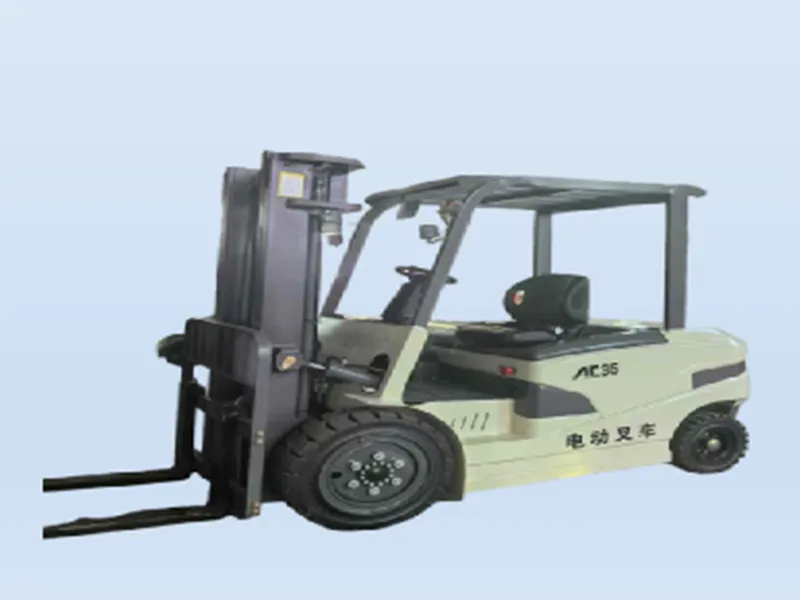
The choice depends on the load geometry, route, and precision requirement. Skates with a hydraulic jack are best for precision indoor positioning, tight clearances, and machinery with irregular bases—they provide millimeter-level control that other methods cannot match. Forklifts and cranes handle vertical lifts and placement but are restricted by aisle width, floor ratings, and ceiling height, and cannot provide the horizontal micro-positioning that skates allow. An outdoor electric pallet truck is best for palletized loads over longer travel distances, particularly on outdoor surfaces and ramps—it reduces manual pushing effort and improves productivity for yard-to-facility transfers.
Q3: What ROI or payback can I expect from using the right skate setup?
ROI from a correctly specified hydraulic jack and skate configuration comes from three sources: shorter move time per machine (a steerable skate set with correct COG alignment typically reduces move time by 30–50% compared to manual repositioning with fixed skates); smaller crew requirement (controlled steering reduces the number of spotters needed for the same move); and fewer floor damage events (correct wheel material for the floor type eliminates the coating chips and concrete cracks that are the most common cost of improvised moves). For a facility performing regular machine moves, the investment in correctly matched equipment typically pays back within the first season of use against avoided floor repair costs alone.
Q4: Do we need to modify machines or floors to use skates safely?
Machine modification is rarely required—the hydraulic jack accesses existing base structure or defined lifting points, and skates support the machine base without attachment. Floor preparation may be required: floor joints wider than the skate wheel diameter need bridging plates; slopes require mechanical load retention hardware; and debris on the route must be cleared to prevent wheel damage and loss of control. For very sensitive floor coatings, hardboard or rubber floor protection sheets under the skate travel path prevent any risk of marking during the move.
Q5: What parameters do you need to recommend the correct skates and jack setup?
To provide an accurate matched recommendation, provide: total machine weight; COG position relative to the machine base footprint; machine base dimensions and available lifting points; required lift height; floor type and condition along the route; route details including distance, maximum slope, floor joint widths, and any indoor-to-outdoor transitions; turning radius constraints at the tightest turn on the route; quantity of moves anticipated; and current problems with existing equipment or methods (wheel failures, floor damage, steering difficulties, unstable loads, or excessive crew requirements).
 English