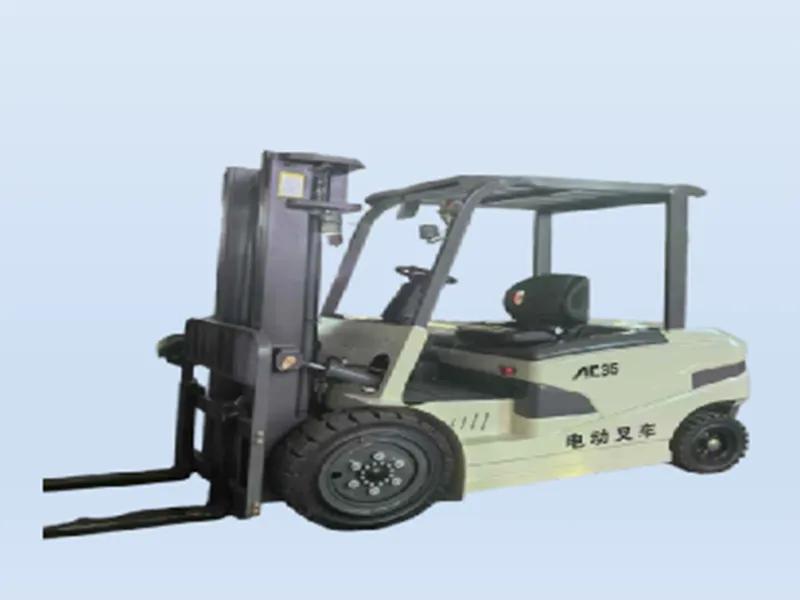
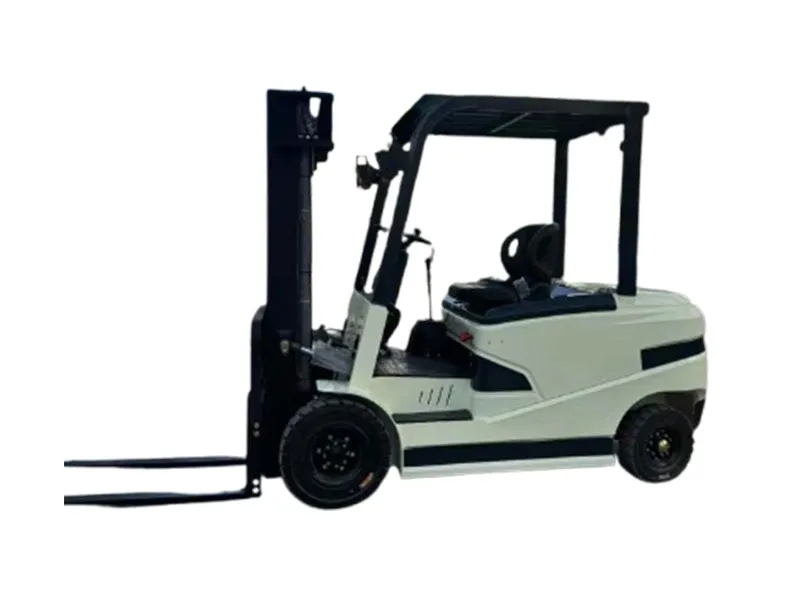
In high-density warehouses, every inch of aisle width and every extra rack level directly impacts throughput and profit. The right material handling lifting equipment helps operations store more, pick faster, and reduce damage — without expanding the building footprint. This guide explains the benefits of forklift solutions in electric models for modern warehousing, focusing on space optimization, indoor safety, and all-day operational efficiency.
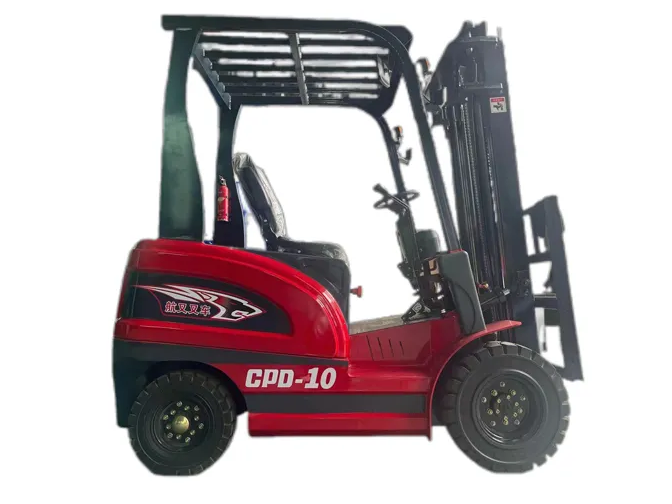
Benefits of Forklift Design: How Electric Models Enable Space-Saving Layouts
Why Space Starts with Equipment Dimensions
The forklift does not just move product — its physical dimensions define the minimum aisle width the warehouse must maintain. A wider forklift or a larger turning radius means wider aisles, which means fewer rack rows in the same building footprint.
| Design Factor | Electric Forklift Advantage | Warehouse Impact |
|---|
| Turning radius | Compact counterbalance and reach truck designs have tighter turning circles | Narrows required aisle width; adds rack rows |
| Overall machine width | Electric counterbalance models typically narrower than diesel equivalents | Direct storage density improvement |
| Mast visibility | Electric mast designs often provide better upward sightlines | More confident placement at height; fewer drops |
| Drive control | Smooth electric acceleration and deceleration | Precise pallet positioning reduces rack damage |
| Reach truck capability | Extends into rack with mast; does not require full turning room | Enables very narrow aisle (VNA) configurations |
Storage Impact in Practice
A warehouse transitioning from 3.5-metre aisles (standard for counterbalance diesel) to 2.8-metre aisles (achievable with a reach truck) can add two to three additional rack rows in a typical 5,000 square metre facility — without any construction. The storage capacity gain from equipment selection alone can exceed 15–20% in well-planned layouts.
The practical rule is straightforward: match forklift class and turning radius to your aisle width target first, then confirm load capacity and lift height requirements. Starting from the equipment spec and designing the aisle around it is significantly more expensive than the reverse.
Benefits of Forklift Indoor Performance: Clean Operation, Lower Noise, Better Control
What Warehouse Managers Actually Care About
The benefits of forklift electric models in indoor environments are most visible in three areas that diesel simply cannot match: air quality, noise level, and handling precision.
Zero Exhaust — Indoor Air Quality Without Compromise
Diesel forklifts emit carbon monoxide, nitrogen oxides, and particulate matter. In a fully enclosed warehouse, these emissions accumulate — requiring ventilation investment, creating health and safety compliance obligations, and in some jurisdictions triggering regulatory restrictions on use hours.
Electric forklifts produce zero direct emissions. There is no ventilation engineering required for the forklift itself, no idle emission during breaks, and no CO monitoring obligation driven by the equipment.
Lower Operating Noise
| Noise Source | Diesel Forklift | Electric Forklift |
|---|
| Engine idle | Continuous — 75–85 dB typical | None |
| Under load | Elevated — engine load increases noise | Motor noise only — significantly lower |
| Braking | Mechanical brake noise | Regenerative braking — quieter |
Lower ambient noise in the warehouse improves verbal communication between operators and pedestrians, reduces operator fatigue on long shifts, and supports compliance with occupational noise exposure limits without requiring hearing protection programs driven by the equipment.
Smooth Acceleration and Handling Precision
Electric motors provide instant, proportional torque response — meaning the operator gets exactly the speed they request rather than managing engine lag. This translates directly into:
More precise pallet placement at height, reducing rack beam damage
Gentler handling of fragile goods, reducing product damage claims
Better low-speed control in congested pick areas and around pedestrian zones
Benefits of Forklift Efficiency: Battery, Charging Strategy, and Multi-Shift Planning
Electric Fleet Planning Is About Uptime, Not Just Range
The most common concern about electric forklifts in multi-shift operations is charging downtime. This concern is valid if charging is not planned — and largely manageable when it is.
Battery Capacity Planning
| Shift Structure | Battery Strategy | Practical Approach |
|---|
| Single shift (8 hours) | Standard lead-acid or lithium battery | Charge overnight; full charge available each morning |
| Two shifts (16 hours) | High-capacity battery or opportunity charging | Charge during lunch break and shift handover; confirm runtime under actual load |
| Three shifts or 24-hour | Battery swap or multiple charging points | Battery swap program eliminates charging downtime entirely |
Opportunity Charging vs. Battery Swap
Opportunity charging — plugging the forklift in during natural breaks (lunch, shift change, operator rest periods) — is viable for most two-shift operations without requiring a battery swap program. The key is standardizing when and where charging happens, and ensuring operators follow the protocol consistently.
Battery swap programs require additional battery inventory and a swap station but eliminate charging as a constraint entirely. This approach is typically justified when three or more shifts run with high utilization and downtime cost is high.
Specifications to Request When Comparing Electric Models
| Specification | What to Ask | Why It Matters |
|---|
| Battery type | Lead-acid, lithium-ion, or gel | Lithium charges faster and has longer cycle life; higher upfront cost |
| Charging time | Hours from 20% to 100% charge | Defines whether overnight or opportunity charging is sufficient |
| Energy consumption | kWh per operating hour at typical load | Allows accurate cost per hour calculation |
| Runtime at rated load | Hours of operation per full charge | Confirm against your actual shift length and workload |
Benefits of Forklift Maintenance: Lower Daily Upkeep for Indoor Operations
Fewer Maintenance Tasks, More Predictable Scheduling
One of the most practically significant benefits of forklift electric models is the reduction in daily and weekly maintenance obligations compared to diesel equivalents.
Maintenance Comparison
| Maintenance Task | Diesel Forklift | Electric Forklift |
|---|
| Engine oil change | Required at defined intervals | Not applicable — no combustion engine |
| Fuel filter replacement | Required | Not applicable |
| Air filter service | Required — more frequently in dusty environments | Not applicable |
| Exhaust system inspection | Required | Not applicable |
| Hydraulic system service | Required | Required — same for both types |
| Tyre inspection and replacement | Required | Required — same for both types |
| Brake inspection | Required | Required — regenerative braking reduces wear rate |
| Battery maintenance | Not applicable | Required — water level (lead-acid), terminal checks, capacity trending |
The reduction in engine-related maintenance tasks does not eliminate maintenance — it shifts it from unpredictable engine service events to more routine and schedulable checks. This predictability is operationally valuable because it reduces unplanned downtime and simplifies the maintenance planning workload for facility managers.
Warehouse Readiness Benefits
No oil or fuel leaks on warehouse floors — eliminates slip hazard and cleanup cost
No fuel storage requirement on-site — removes fire and spill compliance obligations
Cleaner operating environment for products, staff, and floor maintenance teams
Easier preventive maintenance scheduling tied to shift patterns and battery cycles
Benefits of Forklift Selection: Choosing the Right Electric Model for Your Warehouse
Selection Checklist for Indoor Material Handling Lifting
The right electric forklift is defined by the warehouse it operates in — not by a catalog specification in isolation.
Load and Lift Requirements
| Parameter | What to Define | Note |
|---|
| Rated load capacity | Maximum pallet or unit load weight | Select rated capacity above maximum load — not at it |
| Typical working load | Average load weight across shifts | Affects battery runtime and drivetrain wear |
| Maximum lift height | Highest rack level serviced | Determines mast type: simplex, duplex, triplex, or quad |
| Load centre | Distance from fork face to load centre of gravity | Affects actual available capacity at height |
Aisle and Layout Requirements
| Layout Factor | Specification to Confirm | Forklift Type Implication |
|---|
| Aisle width | Measured clear working width | Counterbalance: minimum 3.0–3.5 m; reach truck: 2.5–2.8 m |
| Racking system | Drive-in, selective, push-back, or mobile | Determines entry method and forklift maneuverability requirement |
| Floor condition | Level, smooth, or uneven | Indoor electric: cushion tyres on smooth floors only |
| Dock usage | Ground level or dock height | Confirm ramp grade-ability for dock entry |
Safety Features to Specify
Blue or red pedestrian warning lights projected ahead of and behind the machine
Speed limiters for congested pick zones and pedestrian crossings
Stability systems for high-lift operations with side-loaded pallets
Operator presence sensors that prevent accidental movement when the seat is unoccupied
Camera systems for high-lift placement visibility where direct sightlines are limited
Conclusion
For indoor material handling lifting, electric forklifts have become the warehousing standard because they enable tighter aisle configurations, deliver zero-emission operation, reduce noise and product damage, and offer predictable maintenance schedules that keep fleets available. With the right battery strategy and forklift configuration matched to your aisle width, rack height, and shift structure, warehouses can increase storage density while improving both safety and daily operational efficiency.
FAQ
Q1: How do electric forklifts help maximize warehouse storage space?
Electric forklift designs — particularly reach trucks and compact counterbalance models — enable narrower operating aisles than diesel alternatives. Tighter aisles mean more rack rows in the same building footprint. Precise electric motor control also improves operator confidence at height, supporting higher rack utilization without increased product damage.
Q2: What are the main benefits of forklift electric models for indoor warehouse use?
Zero direct emissions for indoor air quality, significantly lower operating noise, smooth acceleration and precise control for fragile goods handling, reduced fluid leak risk for floor safety, and lower routine maintenance obligations from the absence of a combustion engine. These advantages compound across a full operating year into measurable reductions in damage, incidents, and unplanned downtime.
Q3: What charging strategy works best for a multi-shift warehouse operation?
For two-shift operations, opportunity charging during lunch breaks and shift handovers is typically sufficient if battery capacity is matched to shift length and load intensity. For three-shift or 24-hour operations, a battery swap program eliminates charging as a constraint entirely. Lithium-ion batteries support faster charging and longer cycle life than lead-acid, which improves flexibility for high-utilization fleets.
Q4: What forklift specifications matter most for narrow-aisle warehousing?
The critical specifications are overall machine width, turning radius, rated load capacity at maximum lift height, and mast type. Aisle width drives the forklift type selection — counterbalance models for standard aisles, reach trucks for narrow aisles, and very narrow aisle (VNA) turret trucks for the tightest configurations. Confirm sightline visibility at your target rack height before finalizing the specification.
Q5: Should diesel forklifts ever be used inside a warehouse?
Diesel forklifts are generally not appropriate for enclosed indoor warehouse environments without substantial ventilation engineering due to exhaust emissions. They are better matched to outdoor yards, construction sites, and well-ventilated heavy-duty loading areas. For most indoor warehouse aisles — particularly in facilities with any pedestrian traffic or product sensitivity — electric forklifts are the standard and preferred specification.
 English