Toe jacks, bottle jacks and floor jacks can all raise heavy loads, but they solve different lifting problems. A buyer who compares them only by rated tonnage may receive a tool that cannot enter beneath the load, cannot reach the approved lifting point, occupies too much floor space or becomes difficult to control during positioning. The result may be lost production time, additional rental costs and pressure on operators to improvise.The best jack is therefore not the one with the highest capacity or the lowest price. It is the jack whose minimum height, lifting interface, stroke, mobility, stability and operating method match the complete job. A low machine frame may require a toe jack even when a bottle jack offers the same tonnage. A truck workshop may favor a rolling floor jack because it can reach under an axle from a safe position. A compact bottle jack may be the most practical tool for a straightforward vertical lift where sufficient clearance already exists.This comparison guide is written for industrial maintenance teams, machinery installers, vehicle workshops, contractors, purchasing managers and international distributors. It explains how the three designs differ, where each performs best, which specifications matter beyond load capacity and how Jucai helps buyers match lifting equipment to actual working conditions.
Why Choosing the Wrong Heavy Duty Lifting Jack Can Cost More Than You Think
Choosing the wrong heavy duty jack creates hidden costs when the equipment cannot safely access, raise, control or support the intended load under real site conditions.Purchase price is usually a small part of the total cost of a lifting task. The larger costs come from labor, shutdown time, equipment rental, damaged components, delayed installation and repeated setup. A jack that appears economical can become expensive if the team discovers on the day of the lift that its closed height exceeds the available clearance by 20 millimeters.
The Cost of Insufficient Access
Industrial machines often sit close to the floor. Their approved lifting points may be behind a frame member, below an enclosure or only accessible from one side. A bottle jack needs enough vertical space for its body and saddle before the ram begins to rise. A floor jack has a low saddle but also needs horizontal access for its long chassis. A toe jack reaches beneath a low edge, but the toe must contact a structurally approved point.When the selected tool cannot reach the load, teams may try to create access with pry bars, uncontrolled wedges or improvised extensions. This adds time and can create an unstable load path. Measuring the actual entry height and access direction before purchasing is therefore more valuable than choosing a larger nominal capacity.
Downtime Can Exceed the Value of the Jack
Consider an illustrative factory relocation in which four technicians wait two hours while a replacement lifting tool is delivered. Even before production losses are included, the project has consumed eight labor-hours. If the machine blocks an assembly line or installation contractor, the indirect cost can be much higher than the price difference between the correct jack and an unsuitable one.Industrial buyers should calculate the cost of a failed lifting attempt, not only the purchase price. This includes mobilization, permits, contractor standby time, blocked work areas and the possibility that another crane or rigging system must be hired at short notice.
Wrong Geometry Can Damage the Load
A jack transfers a concentrated force into the lifting point. If the saddle is too small, the toe contacts a thin plate or the floor jack is positioned under an unapproved vehicle component, the load can deform before it rises. Damage may appear as bent frames, cracked castings, distorted machine bases or misaligned doors and guards.The lifting-point drawing should be treated as part of the jack specification. When no approved point exists, an engineer may need to design a spreader plate, saddle or lifting bracket. The jack capacity alone does not show whether the load can accept the contact pressure.
Uncontrolled Movement Creates a Second Cost
A load can shift as it rises because the center of gravity is not directly above the jack, the foundation settles or several lifting points move at different speeds. A compact bottle jack is easy to place, but its relatively narrow base may be unsuitable where lateral stability is poor. A floor jack can roll slightly as its lifting arm changes angle, which is part of its normal operation but requires a smooth, firm floor. A toe jack provides low access, yet the base and toe must remain fully seated.OSHA requires the operator to ensure that a jack has sufficient rating, requires the rated load to be permanently marked and states that a raised load must be cribbed, blocked or otherwise secured immediately. These requirements highlight a central buying principle: the jack raises the load, while a separate support method controls the risk after lifting.
Inspection and Repair Costs Are Often Ignored
The lowest-cost jack may have limited access to seals, wheels, valves or replacement components. If a small leak or damaged caster removes the equipment from service for weeks, the apparent saving disappears. OSHA specifies inspection intervals of at least once every six months for covered jacks used constantly or intermittently at one locality, as well as inspections when special-work jacks leave and return to the shop and immediately before and after abnormal load or shock.A purchasing comparison should therefore include spare seals, service instructions, hydraulic fluid requirements, wheel replacement, capacity-label durability and supplier response. Lifecycle readiness is especially important for tools shared across several facilities.
Toe Jack, Bottle Jack, and Floor Jack: Understanding the Key Differences
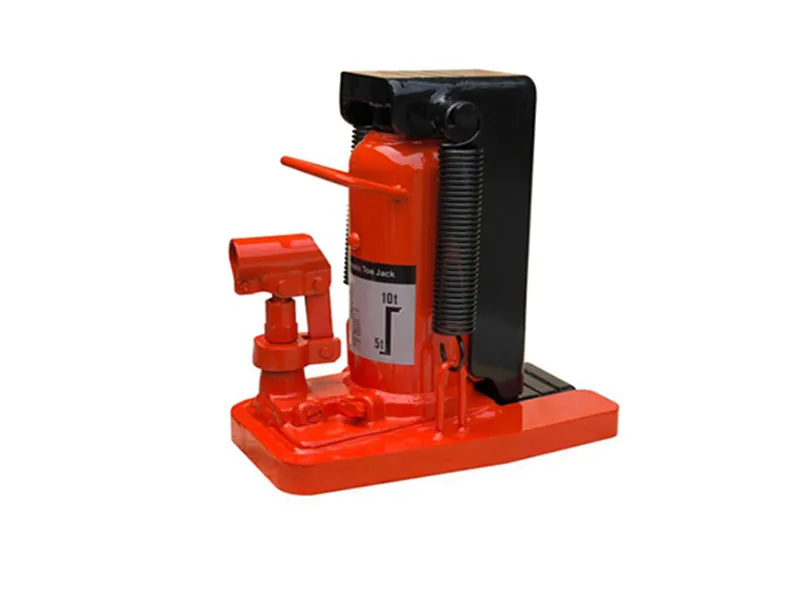
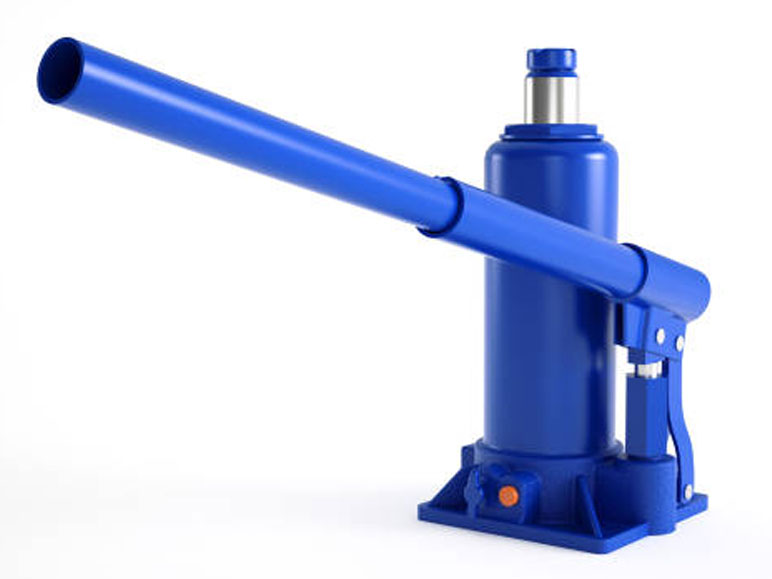
A toe jack lifts from a low side-mounted toe, a bottle jack lifts vertically through a compact upright ram, and a floor jack raises a saddle through a wheeled horizontal chassis and lifting arm.The three jack types may use hydraulic force, but their geometry changes how they approach the load. This difference affects minimum height, available stroke, portability, stability and the industries in which each design is most useful.
| Comparison Factor | Toe Jack | Bottle Jack | Floor Jack |
|---|
| Primary lifting interface | Low toe or claw under the load; many models also have a top saddle | Vertical saddle directly above the ram | Remote saddle at the end of a lifting arm |
| Access requirement | Very low vertical clearance at a suitable edge | Enough vertical space for the closed body | Low saddle clearance plus horizontal space for the chassis |
| Best mobility | Portable between machine lifting points | Compact to carry and store | Fast rolling movement on a smooth workshop floor |
| Typical working environment | Factories, machinery installation, rigging and equipment relocation | General vertical lifting, field maintenance and vehicle support preparation | Garage, truck, fleet and vehicle maintenance bays |
| Main limitation | Requires a strong low contact edge and stable toe engagement | Cannot enter beneath low loads and has a compact base | Heavy and bulky; unsuitable on rough or soft ground |
| Most important specification | Minimum toe height and capacity at the toe | Closed height and adjustable screw or ram travel | Saddle height range, reach, wheel design and chassis length |
| Best buying logic | Choose for low-clearance industrial machinery | Choose for compact, direct vertical lifting | Choose for fast vehicle access on prepared floors |
Toe Jack: Designed for Low-Clearance Industrial Loads
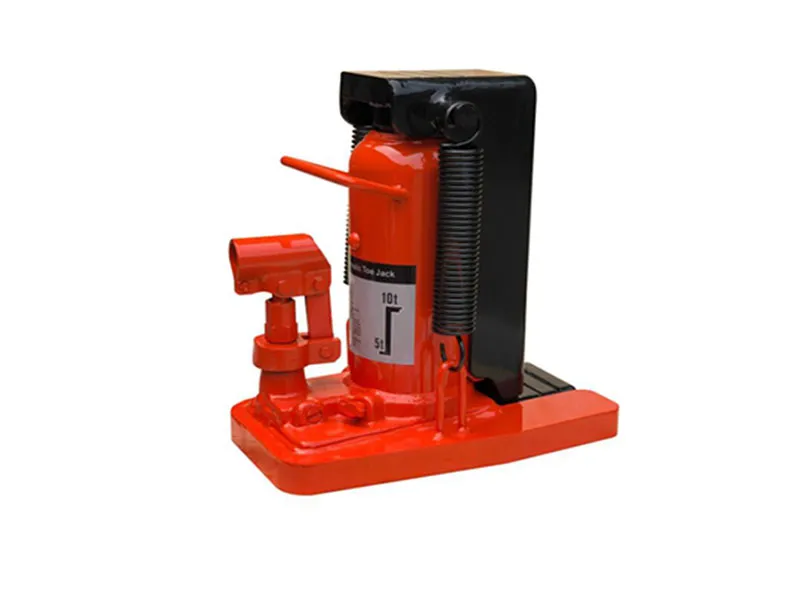
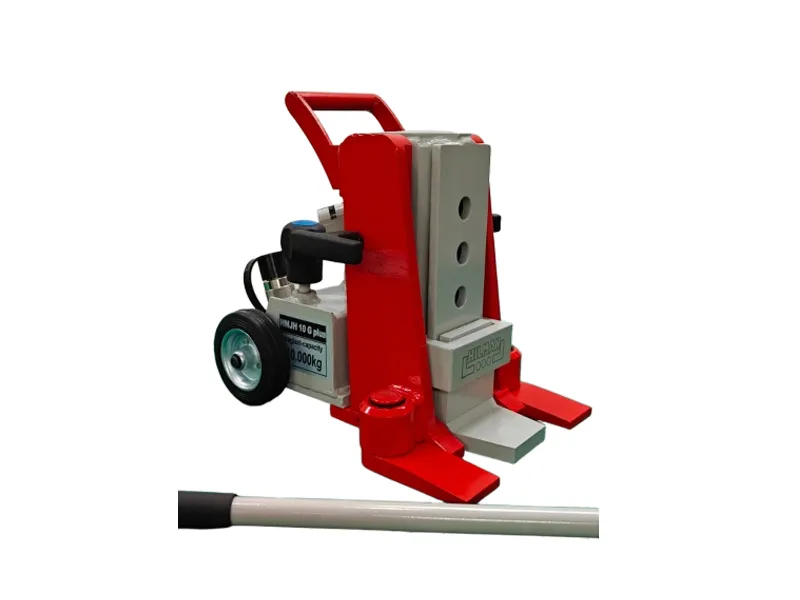
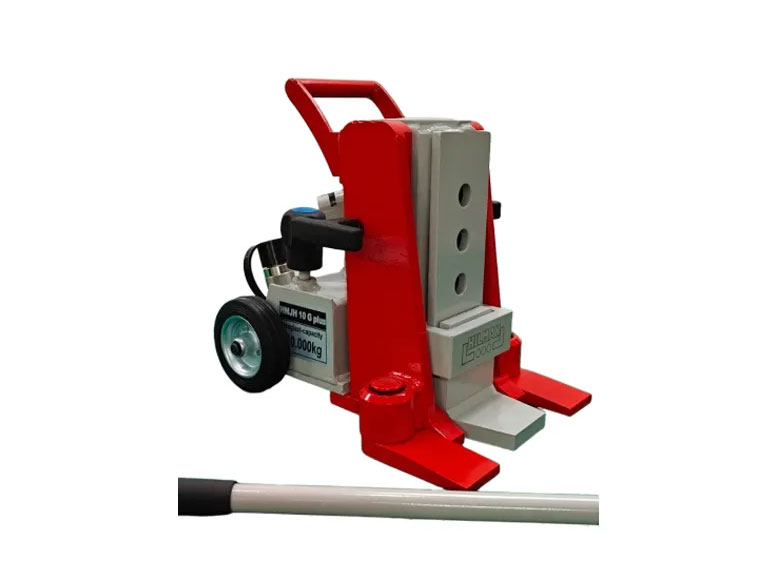
A toe jack uses a projecting toe positioned near the floor. The toe slides beneath the machine frame, transformer base or equipment edge while the hydraulic mechanism raises the load. Some models also permit lifting from a top saddle, giving the tool two contact options.Jucai's published toe-jack guidance describes model-dependent entry heights of approximately 0.5 to 1 inch, equivalent to about 12.7 to 25.4 millimeters, and capacities extending from 2 to 100 tons across different designs. These figures are general product-range references rather than specifications for every model. Buyers must verify the exact toe height, toe capacity and head capacity on the selected datasheet.When machinery provides only a narrow gap, a properly selected Industrial toe jack can create the initial clearance needed to install machine skates or cribbing. It is usually the strongest of the three options for factory relocation and equipment positioning, but it should not be used against decorative covers, thin sheet metal or unapproved edges.
Bottle Jack: Compact Force for Direct Vertical Lifting
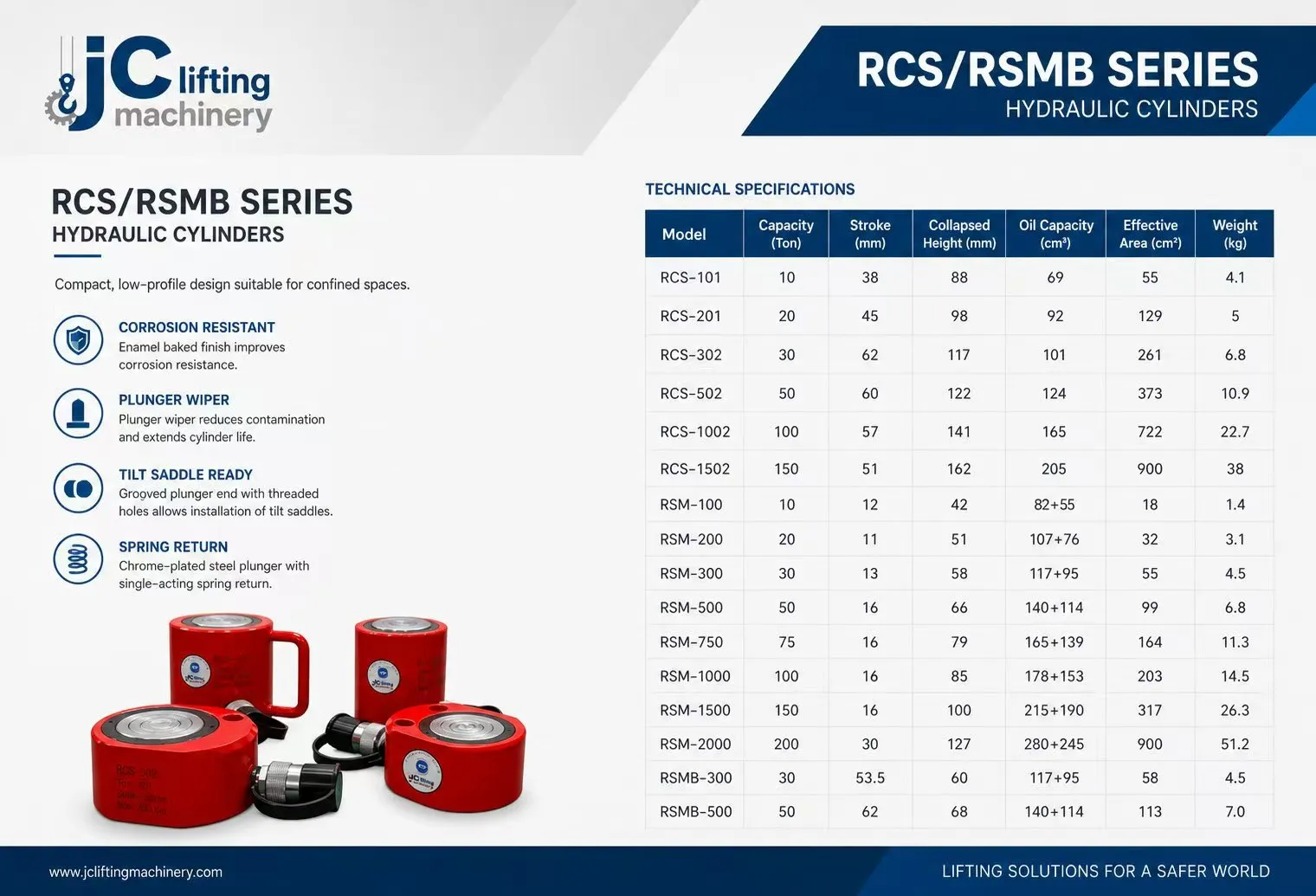
A bottle jack places a vertical hydraulic ram above a compact base. The design provides high force in a small footprint and is easy to store in a service vehicle or workshop. Many models include an adjustable screw extension that closes part of the gap before hydraulic travel begins.The main constraint is closed height. The entire jack body must fit between the foundation and the lifting point. This makes the design effective under trucks, trailers, structural members and equipment with generous ground clearance, but less useful under machines sitting close to the floor.Industrial purchasers may choose a heavy duty bottle jack where the lift is primarily vertical, the ground is firm and the contact point is directly above the base. The compact footprint must not be mistaken for automatic stability; base pressure and lateral load remain important.
Floor Jack: Fast Workshop Access and Rolling Positioning
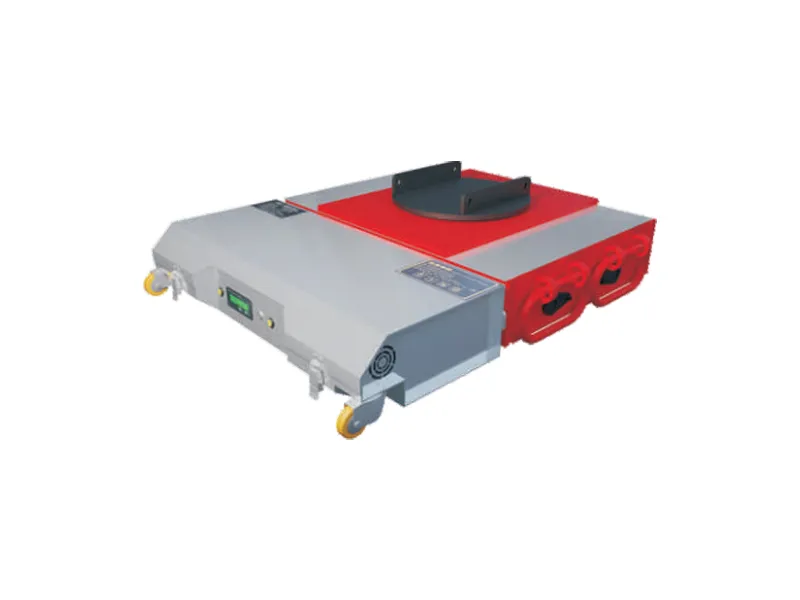
A floor jack uses a long wheeled chassis and a pivoting lifting arm. The operator rolls the saddle beneath a vehicle lifting point and pumps from a position away from the load edge. As the arm rises, the jack normally rolls slightly to maintain the lifting geometry, so its wheels and the floor surface are functional parts of the system.The low saddle and long reach make floor jacks efficient for garages, fleet shops and maintenance bays. Their weight and chassis length make them less convenient for stairs, construction sites, gravel, uneven slabs and confined industrial machinery. For buyers evaluating a 20 ton floor jack, capacity should be checked together with saddle height, chassis reach, wheel loading, handle control and the rated vehicle lifting point. The 20-ton label does not mean the jack can safely lift any 20-ton vehicle in every position.
One Hydraulic Principle, Three Different Workflows
All three designs may use hydraulic pressure, but the operator experience is different. A toe jack approaches the load from the side at floor level. A bottle jack is placed directly below the lift point. A floor jack is rolled into position and transfers force through a lifting arm. This is why a tonnage-only comparison produces poor purchasing decisions.
Which Jack Performs Best in Different Lifting Scenarios?
Jack performance depends on how well the tool's access geometry, mobility, support area and lifting motion match the specific load and worksite.
Scenario 1: Moving a CNC Machine with 18 mm of Ground Clearance
The toe jack is the clear starting point because a bottle jack cannot fit beneath the frame and a floor jack may not have access to an approved central lifting point. The toe must engage a reinforced base edge, and the lift should be high enough only to install machine skates or approved blocking.The team should use multiple lifting points if the machine base is long or sensitive to twist. Point loads must be estimated from the machine's center of gravity, not by assuming equal weight at every corner.
Scenario 2: Raising a Truck Axle in a Fleet Workshop
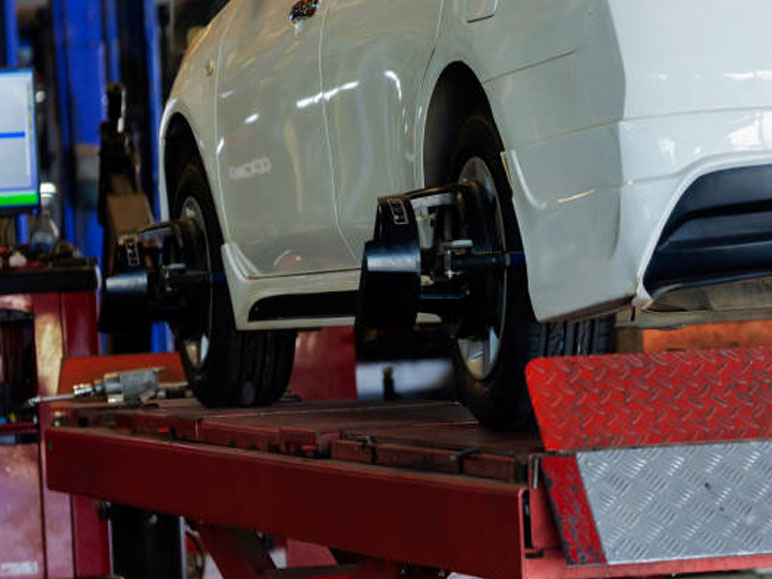
A floor jack is usually the most productive option on a level concrete floor. It rolls beneath the approved axle or chassis point, permits the operator to work from a convenient position and can be moved quickly between vehicles. After lifting, appropriately rated stands must support the vehicle.A bottle jack can also be suitable, particularly for roadside or field work where portability matters more than speed. It requires enough axle clearance and a firm base. A toe jack normally offers no advantage unless the vehicle or equipment has an unusual low lifting edge.
Scenario 3: Field Repair on Uneven or Soft Ground
A compact bottle jack may be easier to transport, but the ground condition becomes the controlling issue. The base needs an engineered plate or blocking capable of distributing the load. A floor jack is generally unsuitable because its small wheels cannot roll correctly on soil, gravel or broken pavement.A toe jack can work if there is a suitable low contact point, yet its base also requires stable support. No jack type compensates for inadequate ground bearing capacity.
Scenario 4: Installing a Transformer in a Restricted Plant Room
A toe jack is commonly preferred because transformers and electrical cabinets often have low base channels and limited overhead access. Small controlled lifts can create clearance for rollers, skates or final alignment. The toe location should be confirmed by the equipment manufacturer to avoid deforming the tank or enclosure.A bottle jack may be useful if approved lifting pockets or a raised base provide sufficient height. A floor jack may be blocked by walls, cable trenches or the transformer's footprint.
Scenario 5: Routine Tire and Brake Work
A floor jack offers the fastest workflow in a prepared garage. Its long handle, rolling saddle and broad range of models support repeated vehicle servicing. The operator can approach different lifting points without carrying the jack under the vehicle.Bottle jacks remain valuable as emergency or mobile service tools, but they are slower to position repeatedly. Toe jacks are specialized industrial tools and are rarely the most efficient choice for ordinary wheel service.
Scenario 6: Lifting a Steel Module from Several Points
None of the three jack types should be selected independently without an engineered multi-point plan. Toe or bottle jacks may provide the required force, but several units can move at different rates because load distribution and operator input are unequal. A synchronized hydraulic system may be more appropriate.Where manual jacks are approved, the procedure should define the lifting sequence, maximum permitted level difference, blocking stages and communication between operators. A rolling floor jack is generally not intended for coordinated structural lifting.
| Application | First Choice | Possible Alternative | Reason |
|---|
| Low-clearance machinery installation | Toe jack | Low-height cylinder or wedge jack | Lowest access point and controlled machinery positioning |
| Truck workshop | Floor jack | Bottle jack | Fast rolling access and repeated servicing |
| Roadside or mobile repair | Bottle jack | Portable floor jack where the surface permits | Compact storage and direct vertical force |
| Transformer or cabinet relocation | Toe jack | Bottle jack if sufficient clearance exists | Low frame access and compatibility with machinery skates |
| Rough construction ground | Application-specific bottle or toe jack with engineered base support | Hydraulic cylinder system | Floor jack wheels require a smooth prepared surface |
| High-cycle vehicle service | Floor jack | Air-hydraulic floor or bottle jack | Mobility and operating speed |
| Multi-point precision lifting | Synchronized system | Multiple approved jacks under a controlled procedure | Level control matters more than individual jack type |
What Matters More Than Load Capacity When Choosing a Jack?
Specifications such as minimum height, stroke, load interface, base stability, operating surface and control method can be more decisive than rated capacity because they determine whether the jack can be used correctly.
Minimum Height
Minimum height is the distance needed to insert the lifting interface beneath the approved point. For a toe jack, this is the toe entry height. For a bottle jack, it is the full closed height. For a floor jack, it is the saddle height at its lowest position.Measurements should include any required saddle pad or adapter. A nominal 20-millimeter clearance is not sufficient for a 20-millimeter toe if the floor is uneven or the machine settles.
Usable Stroke and Height Range
Stroke is the moving distance of the ram or arm. It must create enough clearance for the next step, such as installing a stand, skid or foundation shim. Bottle jacks may combine hydraulic stroke with an adjustable screw, while floor jacks provide a broad saddle height range through their lifting arm.More stroke is not always better. Long extension can increase tool height, weight and sensitivity to side forces. Industrial lifting often uses short controlled stages with blocking between stages.
Capacity at the Actual Contact Point
A toe jack may have different ratings at the toe and the head. The purchaser should not use the top-saddle rating for a toe lift unless the manufacturer expressly states that both are equal. Similarly, a floor jack's label applies to the complete approved jack, not to improvised saddle extensions.
Base Area and Ground Pressure
The jack base transmits the full reaction into the floor. A 20-metric-tonne load corresponds to approximately 196.1 kilonewtons of force. If that force acts through a base area of 0.02 square meters, the average bearing pressure is about 9.8 megapascals before any dynamic or uneven effects are considered.This simplified calculation shows why slab condition and base plates matter. The actual design must consider concrete strength, soil capacity, edge distance, cracks and load distribution.
Side-Load Resistance
Jacks are primarily designed for axial loading. If the saddle is not centered, the load shifts or the jack stands on a slope, bending and tipping risk increase. A wide floor-jack chassis can provide good workshop stability, but its wheels must move as designed. A bottle jack's compact base requires particularly careful vertical alignment.A toe jack may include a broad base or rotating body, yet the toe must remain fully engaged. Swivel features do not authorize uncontrolled side loading.
Portability and Setup Time
Bottle jacks are compact and usually easiest to transport. Toe jacks are heavier but remain portable for machinery-moving teams. Floor jacks are fast to roll on a level floor but can be difficult to load into service vehicles or move between buildings.Purchasers should compare the real route from storage to the work area. Stairs, thresholds, mezzanines and narrow aisles can be more important than jack weight on the datasheet.
Control During Lowering
Lowering quality affects safety and alignment. A release valve that changes from no movement to rapid descent with minimal adjustment makes precision work difficult. Industrial buyers should request information about metering control and test the jack with an appropriate load where possible.
Support After the Lift
The purchase should include stands, cribbing or other approved support if the load must remain elevated. OSHA states that the load must be secured immediately after raising. A hydraulic seal is not a substitute for a mechanical support system.
Working Surface
A floor jack depends on its casters and wheels. A sloped, cracked or rough surface can prevent the chassis from moving during the lift and introduce lateral force. Bottle and toe jacks can be used in more confined positions, but both still require a firm, level foundation or suitable blocking.
Inspection and Documentation
Capacity markings, operating instructions, spare-parts lists and inspection criteria are part of the product. OSHA also requires positive stops for construction jacks to prevent overtravel and requires out-of-order jacks to be tagged and removed from use until repaired.
How Industrial Buyers Actually Choose Between Toe Jacks, Bottle Jacks, and Floor Jacks
Industrial buyers choose a jack by converting the lifting task into measurable requirements for access, point load, stroke, mobility, environment, duty cycle and post-lift support.
1. Start with the Load Drawing, Not the Product Catalogue
The most useful information is the total mass, center of gravity, approved lifting points and base geometry. A machine weighing 40 tonnes may place more than 15 tonnes on one corner if the center of gravity is offset. Buying four 10-ton jacks because 40 divided by four equals 10 can therefore be unsafe.Request the load manufacturer's lifting instructions where available. For vehicles, use the approved axle, chassis or body lifting points. For machinery, identify reinforced base sections rather than covers or enclosures.
2. Measure Three Dimensions
Industrial buyers should record minimum entry height, required lift distance and available horizontal access. These three measurements usually narrow the selection quickly:
If vertical clearance is extremely low but a reinforced edge is available, prioritize a toe jack.
If vertical clearance is generous and portability is important, consider a bottle jack.
If a low saddle can roll beneath a vehicle from a distance, consider a floor jack.
Photographs should include a scale or tape measure. A verbal statement such as “low clearance” is too subjective for a reliable quotation.
3. Separate Normal Load from Worst-Case Load
A workshop may usually service 8-ton vehicles but occasionally handle a 16-ton axle. A relocation contractor may lift several machine models with different weight distributions. When picking suitable lifting jacks for sale, the selected jack should cover the approved operating envelope, but oversized equipment can become too heavy, too tall or too slow for daily work. Many buyers therefore maintain more than one jack type: floor jacks for regular vehicle work, bottle jacks for mobile support and toe jacks for machinery relocation. The goal is a practical tool set rather than forcing one product to perform every task.
4. Compare the Full Operating Sequence
A good procurement review follows the job from setup to removal:
How is the jack transported to the load?
Can it reach the approved lifting point?
Can the operator see the load and control the pump?
How far must the load rise?
What support is installed after lifting?
Can the jack be lowered and removed without becoming trapped?
How is the jack inspected, cleaned and returned to storage?
A bottle jack may be ideal during lifting but difficult to remove if blocking leaves too little retraction clearance. A floor jack may reach the load but block the technician's work area. A toe jack may create initial clearance but require a second system for the final lift.
5. Evaluate Frequency and Operator Effort
Manual pumping is acceptable for occasional maintenance but can reduce productivity in high-cycle workshops. Air-hydraulic or powered models may be justified when the tool operates repeatedly. Buyers should compare approach speed, loaded lifting speed and lowering control rather than one advertised “fast lift” claim.Operator training is also part of the decision. A portable bottle jack is simple, while multi-point toe-jack work may require experienced riggers and a written sequence. Floor-jack operators need to understand that the jack must be free to roll during normal lifting-arm movement.
6. Match the Jack to the Facility
A clean automotive bay supports floor-jack movement. A crowded factory with machine bases close to walls favors toe-jack access. A service truck with limited storage may favor a bottle jack. Outdoor and freezing conditions require compatible hydraulic fluid, seal materials and corrosion protection.The selected model should fit the site's voltage, compressed-air supply, storage method and maintenance capability. A powered jack is not productive if the correct air pressure or electrical connection is unavailable.
7. Compare Supplier Information Quality
A reliable supplier should request application data and distinguish toe capacity from head capacity, closed height from lifting height and individual capacity from multi-jack system capacity. Drawings, manuals, test information and spare-parts availability are stronger buying signals than a long list of marketing claims.Jucai's lifting equipment portfolio covers toe, bottle, floor, mechanical, electric, air-powered and purpose-designed industrial jacks. This allows buyers to compare solutions around the application rather than being directed toward a single product type.
A Practical Industrial Selection Matrix
| Buyer Priority | Recommended Direction | Questions Before Approval |
|---|
| Lowest possible entry height | Toe jack | Is the toe point structurally approved, and what is the capacity at the toe? |
| Compact storage and field portability | Bottle jack | Does the closed height fit, and is the foundation firm enough? |
| Fast repeated vehicle servicing | Floor jack | Is the floor smooth and level, and does the saddle reach the approved point? |
| High tonnage in a restricted machine area | Toe jack or low-height hydraulic cylinder | Can the load be supported and the tool removed after the initial lift? |
| Emergency service vehicle kit | Bottle jack | Are base plates, wheel chocks and support equipment included? |
| Several lift points with strict level control | Synchronized hydraulic system | What is the allowable height difference and how is displacement monitored? |
Final Recommendation: Which Heavy Duty Jack Fits Your Job Best?
The best heavy duty jack is the design that reaches the approved lifting point, remains stable on the work surface and completes the lifting and lowering sequence without improvised modifications.
Choose a Toe Jack When Low Clearance Controls the Job
Select a toe jack for machine tools, transformers, production equipment and other loads that sit close to the floor. It is particularly valuable when the purpose of the lift is to insert skates, rollers or cribbing. Confirm the toe rating, entry height, toe dimensions and strength of the contact edge.
Choose a Bottle Jack When Portability and Direct Vertical Force Matter
Select a bottle jack for mobile maintenance, trucks, trailers and general lifting where enough vertical space exists. Its compact form is easy to carry and store. Verify closed height, stroke, adjustable extension, base support and saddle contact.
Choose a Floor Jack When Workshop Speed and Reach Matter
Select a floor jack for repeated vehicle work on smooth, level floors. It offers fast positioning, low saddle access and long reach. Confirm that the chassis fits the work bay, the wheels can roll freely and rated stands are available for supporting the raised vehicle.
Choose a Different System When the Job Exceeds All Three
A synchronized structural lift, long-stroke bridge lift or precision multi-point installation may require hydraulic cylinders, powered pumps, sensors and central controls rather than a manually operated toe, bottle or floor jack. The decision should follow the risk and geometry of the project rather than familiarity with a tool.For an accurate recommendation, send Jucai the load weight, lifting-point drawing, minimum clearance, required stroke, operating surface, number of lifting points and expected cycle frequency. This information allows the team to compare a standard jack with a customized industrial lifting solution.
Frequently Asked Questions About Toe Jacks, Bottle Jacks, and Floor Jacks
These FAQs answer common purchasing questions about clearance, capacity, stability and applications when comparing toe, bottle and floor jacks.
1. Is a toe jack safer than a bottle jack?
Neither design is universally safer. A toe jack is better suited to low-clearance machinery, while a bottle jack is effective for direct vertical lifting with sufficient space. Safety depends on correct capacity, contact, foundation, alignment, inspection and immediate support of the raised load.
2. Can a bottle jack lift industrial machinery?
Yes, when the machine has an approved lifting point high enough for the closed jack and the base can remain stable. For machines sitting close to the floor, a toe jack or low-height cylinder is usually more practical.
3. Why is a floor jack better for vehicle workshops?
A floor jack can roll beneath vehicle lifting points, has a low saddle and allows fast repositioning between jobs. It performs best on a smooth, level floor and must be used with appropriately rated stands after the vehicle is raised.
4. Can I use a 20-ton jack to lift a 20-ton load?
Not automatically. The jack rating must not be exceeded, but load distribution, center of gravity, contact geometry, foundation and dynamic effects also matter. The maximum reaction at the actual lifting point may be greater than the average load.
5. Which jack has the lowest minimum height?
A toe jack typically provides the lowest industrial entry point because the toe sits near floor level. Low-profile floor jacks can also have low saddles, but they require horizontal chassis access. Exact minimum heights vary by model.
6. Can a jack support a load while technicians work underneath?
A jack should not be treated as the sole support. OSHA requires raised loads to be cribbed, blocked or otherwise secured immediately in covered workplaces. Use approved stands or an engineered support method before anyone enters the hazard area.
Conclusion: Choose by Geometry and Workflow, Not Tonnage Alone
A reliable jack selection matches the load's geometry and work sequence first, then confirms capacity, stability, control and support requirements.Toe jacks excel where heavy machinery offers minimal ground clearance. Bottle jacks provide compact, direct vertical force for mobile and general lifting. Floor jacks deliver fast rolling access for vehicle workshops. Their rated capacities may overlap, but their access and operating behavior do not.Before purchasing, measure minimum height, calculate the reaction at each lifting point, verify the foundation and plan how the raised load will be supported. Compare serviceability, inspection requirements and spare parts as part of total ownership cost.Jucai provides industrial lifting jacks and supporting hydraulic equipment for factory maintenance, machinery installation, vehicle service and specialized projects. A detailed application brief helps Jucai identify the jack type that fits the job instead of simply recommending the largest available model.
External References
The following official sources support the capacity-marking, blocking, inspection and portable automotive service equipment principles used in this comparison.
OSHA 29 CFR 1910.244 — Other Portable Tools and Equipment: https://www.osha.gov/laws-regs/regulations/standardnumber/1910/1910.244
OSHA 29 CFR 1926.305 — Jacks: Lever and Ratchet, Screw, and Hydraulic: https://www.osha.gov/laws-regs/regulations/standardnumber/1926/1926.305
ASME PASE — Safety Standard for Portable Automotive Service Equipment: https://www.asme.org/codes-standards/find-codes-standards/pase-safety-standard-portable-automotive-service-equipment
 English