Industrial maintenance teams rarely choose lifting equipment in a laboratory setting. They choose it while balancing shutdown schedules, restricted access, limited manpower, safety procedures, available power and the need to return production equipment to service as quickly as possible. In that environment, the difference between a manual jack and an electric jack is not simply whether an operator turns a handle or presses a button. The real difference is how each system affects workflow, repeatability, fatigue, setup time and long-term operating cost.A manual jack can be the most dependable choice for occasional lifts, remote locations and work that demands simple equipment with minimal electrical components. An electric jack can be more productive when lifting is frequent, several points must be operated, or the maintenance team wants remote control and more consistent movement. Neither option is automatically safer or more powerful. The correct selection still depends on rated capacity, closed height, stroke, lifting-point geometry, foundation stability and the method used to support the load after raising it.This guide compares manual and electric lifting systems from the perspective of factory maintenance, machine installation, railway service, energy projects and heavy-equipment repair. It includes a practical operating-cost model, examples from Jucai lifting equipment and a decision process that buyers can use when specifying a new jack system.
Why More Factories Are Replacing Manual Jacks with Electric Jacks
Factories upgrade their heavy duty lifting equipment by replacing manual jacks with electric jacks when powered operation can reduce repetitive operator effort, shorten lifting cycles and provide more consistent control across frequent maintenance tasks.The move toward electric lifting is usually driven by workload rather than fashion. A factory that raises one machine twice a year may gain little from an electric system. A maintenance department that performs several lifts every shift has a different cost structure: manual pumping time, operator fatigue and inconsistent lifting speed begin to affect labor planning and equipment availability.
Repetitive Manual Effort Becomes an Operational Constraint
A hand-operated jack uses a lever, crank, screw or hydraulic hand pump. The mechanism can generate very high force through mechanical or hydraulic advantage, but the operator still supplies repeated input. The difficulty is not necessarily one pumping stroke; it is the accumulation of strokes across long travel, several lifting points and repeated jobs.NIOSH identifies forceful exertion, repetitive motion and awkward posture as workplace ergonomic risk factors. Manual jack operation can involve all three when the handle is positioned near the floor, access is limited or operators must maintain an uncomfortable posture through many pumping cycles. An electric system does not remove every risk, but it can transfer much of the repetitive force demand from the operator to the motor and pump.For occasional field work, a manual lifting jack remains practical because it can operate without a power connection and is relatively easy to understand, transport and inspect. The replacement trend becomes stronger as lifting frequency and production pressure increase.
Maintenance Windows Are Becoming Shorter
Production plants increasingly schedule maintenance during short shutdown periods. If the team must raise, block, align and lower several machines before a line restarts, jack operating speed can influence the entire critical path. Electric operation may shorten the approach and retraction phases, particularly when long-stroke cylinders or several lifting points are involved.The time saving should be evaluated over the complete workflow. A fast electric pump provides little benefit if setup, hose routing, blocking and alignment dominate the job. Conversely, a manual jack may become the bottleneck when all other preparation is complete and operators spend several minutes pumping each lifting point.
Factories Want More Repeatable Movement
Manual speed varies with operator strength, fatigue and handle position. Electric pumps deliver a more consistent flow rate, and powered screw systems can provide repeatable travel when controls and limit devices are properly designed. Consistency is valuable when maintenance teams follow standard work instructions or compare cycle times between shifts.Electric operation does not guarantee synchronized lifting. If several cylinders are connected without appropriate valves, sensors or controls, one point may still move faster because load reactions differ. True synchronization requires a system designed to monitor and control displacement or flow.
Remote Operation Can Improve the Working Position
A separate control pendant allows the operator to stand where the load and lifting points are visible rather than beside a pump handle. This can improve communication and reduce the need to reach into confined areas. It can also support an emergency-stop strategy when the system is designed for powered industrial use.Remote control does not eliminate exclusion zones. Workers should remain clear of crush points, suspended or unsupported loads and potential movement paths. The raised load must still be cribbed, blocked or otherwise secured according to the lifting plan.
Electrification Fits Broader Factory Automation
Maintenance departments increasingly use digital checklists, condition monitoring and standardized tooling. Electric jacks can integrate more easily with limit switches, pressure switches, displacement sensors and recorded operating cycles. Some electric hydraulic power units include counters or maintenance indicators that help teams track service intervals.This level of integration is valuable only when the plant can maintain the electrical and control components. A simple manual system may provide better uptime in facilities without electrical technicians, spare control parts or a reliable power source.
Manual Jack vs Electric Jack: What's the Real Difference?
A manual jack relies on human input to drive a mechanical or hydraulic lifting mechanism, while an electric jack uses a motor to create the mechanical movement or hydraulic pressure required to raise and lower the load.The real distinction is the source and control of input energy. Both designs can use screws, gears, racks or hydraulic cylinders. A manual hydraulic jack may use the same type of cylinder as an electric hydraulic system; only the pump and control method change. Buyers should therefore compare complete systems rather than assume that “manual” and “electric” describe entirely different lifting principles.
| Comparison Factor | Manual Jack | Electric Jack | Industrial Buying Impact |
|---|
| Power source | Human force through a lever, crank, screw or hand pump | Battery, mains electricity or motor-driven hydraulic pump | Manual works without power; electric needs compatible supply and controls |
| Operating speed | Varies with stroke length, handle effort and operator pace | More consistent and often faster during approach and repeated cycles | Electric gains value as lift frequency rises |
| Operator effort | Can become significant during long or repetitive lifts | Motor supplies most lifting input | Electric can reduce repetitive pumping and cranking |
| Initial cost | Usually lower for an equivalent basic lifting function | Higher because of motor, pump, battery, wiring and controls | Compare lifecycle cost rather than purchase price alone |
| Maintenance complexity | Fewer electrical components and simpler troubleshooting | Includes electrical, motor, control and possibly battery maintenance | Electric requires broader technical support |
| Remote control | Possible with a separate hand pump and long hose, but still manually powered | Common through pendant, switch or controlled power unit | Can improve operator position and multi-point workflow |
| Use in remote locations | Strong advantage when no electricity or compressed air is available | Depends on battery runtime, generator or electrical connection | Manual is often more resilient for unpredictable field work |
| Best duty pattern | Occasional, low-frequency or contingency lifting | Repeated, time-sensitive or multi-point lifting | Frequency is often more decisive than tonnage |
Manual Jack Systems
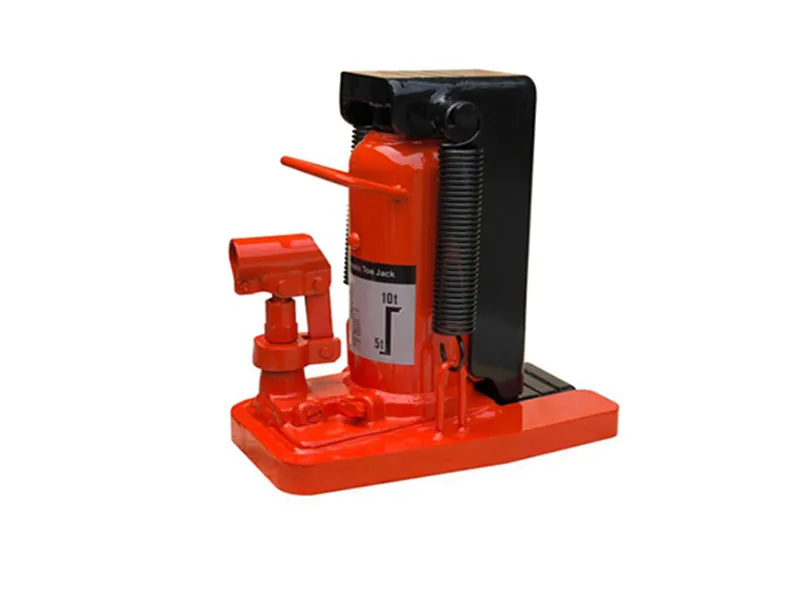
Manual jacks include screw jacks, ratchet jacks, self-contained hydraulic jacks and cylinders powered by hand pumps. Their main advantages are simplicity, lower entry cost and independence from electricity. A hydraulic hand pump can also keep the operator away from the immediate lifting point when connected by a suitable hose.Manual does not necessarily mean low capacity. Jucai's C Series lifting jacks, for example, are operated through an external manual pump and list model capacities of 5, 10, 30 and 50 metric tonnes. Published model data shows toe entry heights from 13 to 35 millimeters and strokes from 200 to 259 millimeters, depending on the model. These figures demonstrate that manual input can serve substantial industrial loads when the complete jack and pump system is properly selected.
Electric Jack Systems
An electric jack may contain an integrated motor or use a separate motor-driven hydraulic pump. A powered hydraulic system can operate one cylinder, several cylinders through a manifold or a synchronized control arrangement. Electric screw jacks use motors and gearing instead of hydraulic fluid.Jucai's current electric hydraulic pump listing provides a useful system example: selected CTE models use a 4-liter reservoir, a 0.75-kilowatt motor and 220-volt power, with a listed maximum output pressure of 10,000 psi, approximately 700 bar. The page also lists two flow values of 3 and 0.32 liters per minute for the relevant models. Buyers must confirm which flow applies to the high-pressure and low-pressure stages and whether the reservoir can supply the total cylinder volume.When buyers research an electric jack, they should identify whether the system is hydraulic or mechanical, integrated or separate, battery-powered or mains-powered, and designed for one or multiple lifting points. The word “electric” alone does not describe the load interface or capacity.
Capacity Is Not Determined by the Power Source
A manual jack and an electric jack can have the same rated capacity because capacity is determined by the load-bearing structure, cylinder area, pressure limit, screw design and other engineered components. Electricity changes how energy is supplied; it does not automatically make the jack stronger.A 50-ton cylinder remains a 50-ton cylinder whether pressure comes from a hand pump or an electric pump, provided both power sources are compatible and limited to the specified pressure. The electric pump may extend it faster, but it must not exceed the cylinder, hose, valve or coupler rating.
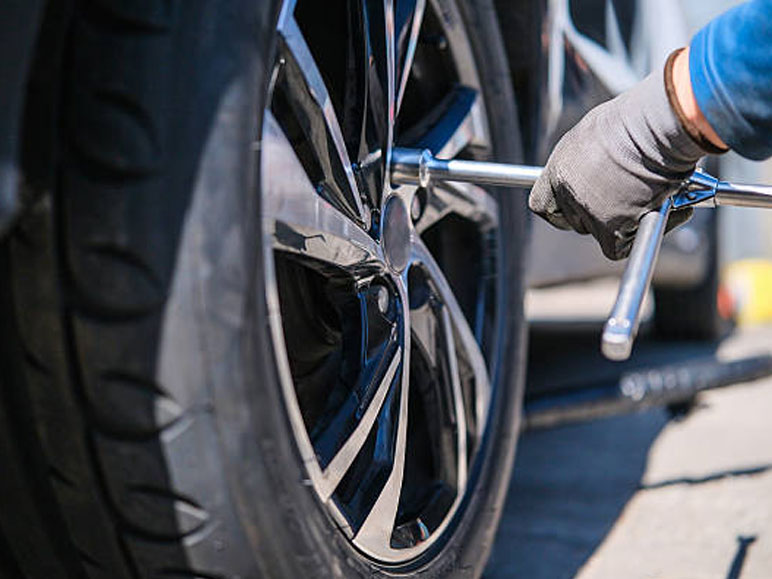
Manual Jack vs Electric Jack: Comparing Efficiency, Safety, and Operating Costs
A fair manual-versus-electric comparison evaluates complete lifting-cycle time, operator exposure, maintenance requirements and annual cost rather than comparing only capacity and purchase price.
Efficiency: Measure the Complete Cycle
The lifting cycle includes transport, setup, connection, approach, loaded movement, blocking, alignment, lowering, disconnection and storage. Electric equipment mainly reduces the powered movement time. A maintenance manager should conduct a timed trial rather than rely on a generic claim that electric jacks are a certain percentage faster.Suppose an illustrative manual process requires 8 minutes for approach, lifting and controlled lowering, while an electric system completes the same powered movement in 3 minutes. If the factory performs 10 comparable lifts per week, the theoretical saving is 50 minutes per week, or approximately 43 hours over a 52-week year. Actual savings will vary with load, stroke, setup and operator practice.When the lift itself represents only a small part of the maintenance task, the economic gain may be limited. When several jacks must travel through long strokes, powered operation can remove a substantial amount of non-value-adding time.
Ergonomics: Repetition and Force Matter
NIOSH describes repetitive motion, forceful exertion and awkward posture as risk factors for work-related musculoskeletal disorders. Manual jack operation can involve repeated pumping at knee height, reaching around equipment or maintaining static grip force. Electric operation can reduce those specific demands, although workers still handle hoses, cables, blocking and the jack body.An ergonomic decision should consider the strongest and shortest task as well as the longest and most awkward one. A manual jack may be comfortable for five strokes but demanding across 100 strokes at four lifting points. Operator feedback and task observation are valuable inputs.
Safety: Powered Does Not Automatically Mean Safer
Electric systems can reduce manual exertion and support remote operation, but they introduce electrical hazards, unexpected powered movement and a need for emergency controls. Manual systems are slower and simpler, but operators may stand closer to the load or use more force.Both designs must comply with the same fundamental jack principles: sufficient rated capacity, a firm foundation, correct lifting point, operation within travel limits and immediate securing of the raised load. OSHA requires the rated load to be permanently marked and requires inspection at intervals appropriate to service, with at least six-month inspections for covered jacks used constantly or intermittently at one location.Electric systems also need lockout or isolation procedures during servicing. Batteries, cables, pendants, relays and motor controls must be inspected according to the manufacturer's instructions and site electrical-safety program.
Initial Purchase Cost
Manual equipment usually costs less because it does not require a motor, battery, electrical cabinet or powered pump. It can be the financially correct choice for low-frequency tasks where labor saving would never recover the price difference.Electric systems cost more upfront, and multi-point control or synchronization increases the investment further. Buyers should separate the cost of the jack, power unit, hoses, valves, sensors, controls, accessories and commissioning so that quotations are comparable.
Energy Cost Is Often Smaller Than Labor Cost
An illustrative energy calculation shows why electricity itself is rarely the main cost. Assume a 0.75-kilowatt electric pump runs for three minutes per lift, 10 lifts per week and 52 weeks per year:Annual electricity use = 0.75 kW × 0.05 hours × 10 × 52 = 19.5 kWh.At an illustrative electricity price of US$0.15 per kWh, annual energy cost would be about US$2.93. The actual cost may be higher because of longer run time, standby equipment, batteries and charging losses, but it is often minor compared with technician labor and production downtime.
Labor-Saving Payback Example
Using the earlier example of 43 saved labor-hours per year and an illustrative loaded labor cost of US$35 per hour, the gross labor value would be approximately US$1,505 annually. If the electric system costs US$4,500 more than the manual alternative, simple labor-only payback would be about three years:US$4,500 ÷ US$1,505 = approximately 2.99 years.This is not a quotation or universal ROI. The calculation excludes financing, maintenance, downtime, injury prevention, training and residual value. Buyers should replace every assumption with site-specific data.
Maintenance Cost
Manual jacks require lubrication, seal inspection, hydraulic-fluid care where applicable and checks for deformation, leaks and damaged threads. Electric systems add motors, switches, cables, connectors, batteries and control components. Their maintenance cost can be higher, but planned service may be offset by lower manual effort and faster cycles.Spare-parts availability matters more than theoretical complexity. A well-supported electric system with documented components may be easier to maintain than a low-cost manual jack with unavailable seals or no drawings.
| Cost Category | Manual Jack | Electric Jack | How to Evaluate |
|---|
| Purchase | Lower in most comparable basic systems | Higher due to power and controls | Compare complete included scope |
| Labor per lift | Higher when pumping or cranking is lengthy | Lower during powered movement | Time actual maintenance cycles |
| Electricity | None | Usually modest relative to labor | Use motor power and run time |
| Inspection | Mechanical and hydraulic checks | Mechanical, hydraulic and electrical checks | Follow local rules and manufacturer schedule |
| Downtime risk | Simple faults may be easier to diagnose | Powered components can fail but may increase throughput when available | Review redundancy and spare parts |
| Training | Operating and blocking procedure | Operating, blocking, electrical isolation and control procedure | Include training in project scope |
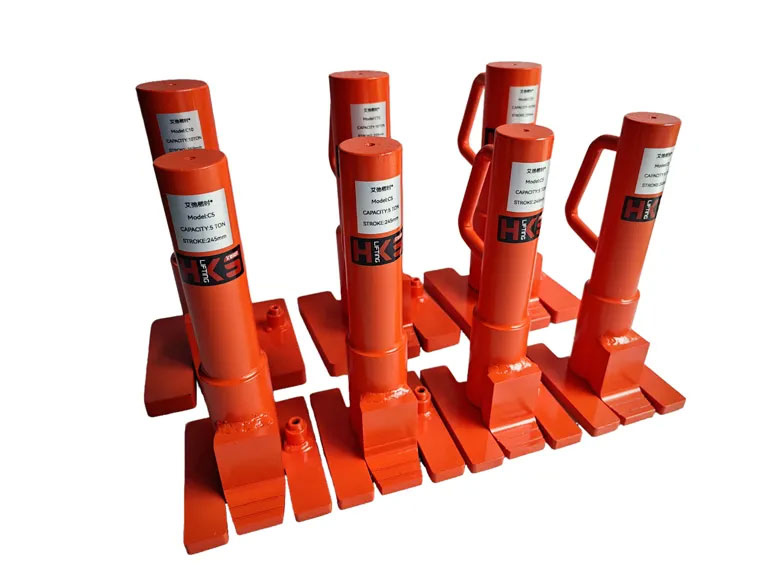
When Does a Manual Jack Still Make More Sense?
A manual jack makes more sense when lifting is infrequent, power availability is uncertain, portability is important and simple equipment provides sufficient control within the maintenance schedule.
Occasional Maintenance
If a jack is used several times per year, the labor saved by electric operation may not justify the additional purchase and maintenance cost. A quality manual system can remain stored, inspected and ready without battery charging or concern about long-term electrical component degradation.
Remote and Field Work
Manual operation is valuable in mines, construction sites, rail corridors, temporary installations and outdoor facilities where electrical power is unavailable or unreliable. A hand pump and hydraulic cylinder can operate independently of mains voltage, although cold-weather fluid and seal compatibility must still be confirmed.
Emergency Backup
Factories with electric jacks may keep manual equipment as contingency tooling. A power outage, damaged cable or failed control component should not prevent a critical load from being lowered or stabilized when the procedure permits manual backup.
Low Cycle Frequency with High Capacity
High capacity does not automatically require electric power. Jucai's manually pumped C Series illustrates how substantial loads can be handled through a separate hand pump. When the stroke is moderate and the task is rare, manual operation can provide strong value.
Simple Maintenance Capability
Facilities without electrical maintenance personnel may prefer mechanical or manual hydraulic equipment. Troubleshooting is typically more direct, and critical spares may consist of seals, valves, hoses and mechanical components rather than controllers and motors.
Fine Incremental Adjustment
Some manual screw jacks and hand-pump systems provide excellent low-speed control for alignment. Electric systems can also deliver precision through variable-speed drives, proportional valves or controlled pulses, but that capability must be designed and may increase cost.
Hazardous or Sensitive Environments
An electric system used in a hazardous area may require suitable explosion-protected components and certification. In some applications, a manual system can simplify compliance, although hydraulic fluid, static electricity and mechanical hazards still require assessment.
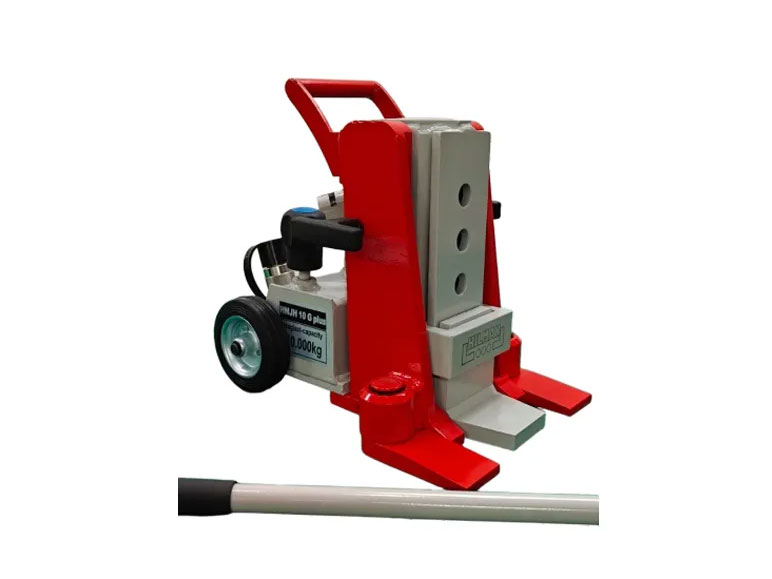
When Is an Electric Jack Worth the Investment?
An electric jack is worth the investment when lifting frequency, stroke length, labor cost, shutdown pressure or multi-point control creates measurable benefits that exceed the added purchase and maintenance cost.
High-Frequency Maintenance
The strongest business case occurs when technicians repeat the same lifting operation daily or weekly. Small time savings accumulate, and reduced pumping can improve consistency late in a shift. The factory should record the number of lifts, manual strokes and minutes per cycle before calculating payback.
Long Stroke or Large Oil Volume
A large cylinder or several connected cylinders may require significant oil volume. Supplying that volume with a hand pump can take many strokes. An electric hydraulic pump can provide faster approach flow and then shift to lower flow at high pressure, depending on the design.
Several Lifting Points
Electric power is helpful when one pump supplies several cylinders, but the system must include proper valves and controls. Where the structure has a strict level tolerance, a synchronized system with displacement feedback may be necessary. Simply connecting four cylinders to one pump does not guarantee equal movement.
Remote-Control Requirements
Maintenance on turbines, rail vehicles, large presses and modules may require the operator to watch several areas or stand outside a restricted zone. A pendant or remote station can improve the working position when combined with cameras, spotters or sensors.
Limited Maintenance Manpower
A powered system can allow a smaller team to manage the jack controls while other workers handle blocking and alignment. It does not eliminate the need for competent personnel, but it can reduce the number of people assigned only to manual pumping.
Standardized Production Support
Factories that perform repeated die changes, fixture adjustments or maintenance lifts may integrate an electric system into standard work. Defined flow, pressure limits, stroke sensors and operating sequences can reduce variation between shifts.
Data and Preventive Maintenance
Electric control systems can record operating cycles, alarms and sometimes pressure or displacement. This information can support preventive maintenance and help identify abnormal loads or increasing cycle time. Data is valuable only when the plant reviews it and has a process for acting on warnings.
Jucai System Options
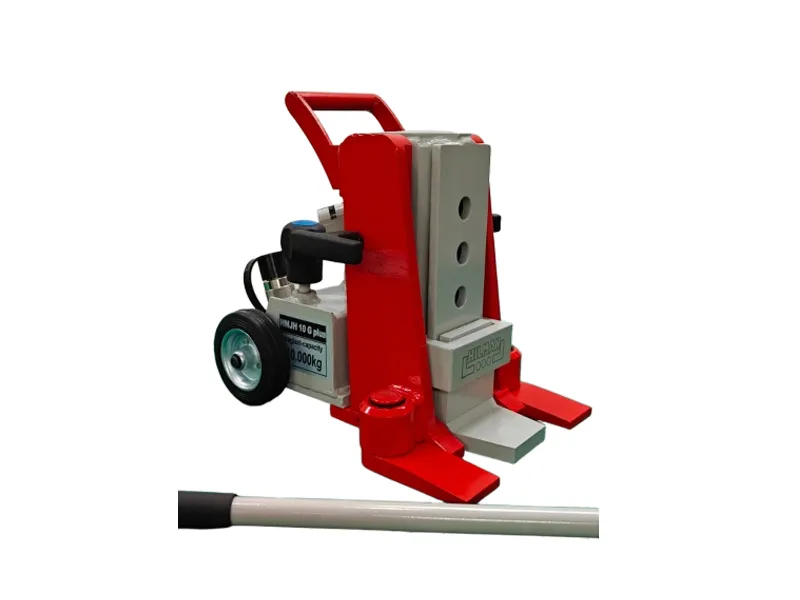
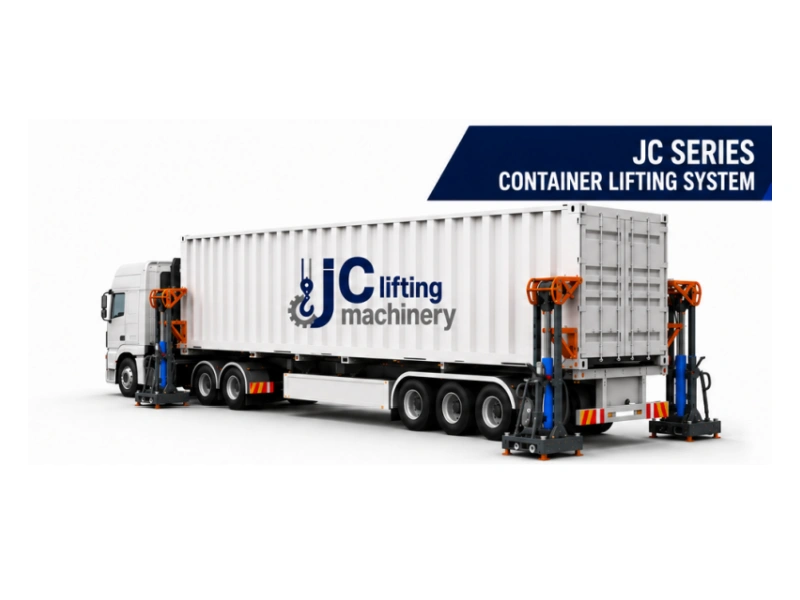
Jucai's range includes manual-pump-operated claw jacks, electric hydraulic pumps, lithium-battery hydraulic pumps, cylinders and specialized lifting systems. Buyers comparing a heavy duty lifting jack should provide the load at each point, number of cylinders, required travel, target speed, available voltage and preferred control arrangement so that the power unit is sized with the jack rather than added later.
Choosing the Right Jack Starts with Your Maintenance Workflow
The right jack is selected by mapping the maintenance workflow from access and setup through lifting, support, alignment, lowering, inspection and storage.
Step 1: Document the Load and Lift Points
Record total mass, center of gravity and the estimated reaction at each approved lifting point. Do not divide total weight equally unless load distribution has been verified. Include photographs, drawings and the material of the contact area.
Step 2: Measure Access and Required Travel
Measure minimum clearance, required stroke, final height and horizontal access. The power source cannot compensate for a jack that does not fit beneath the load. Include adapters, saddles and base plates in the dimensions.
Step 3: Count Lifts and Pumping Time
Record how often the task occurs, the number of lifting points and the minutes spent pumping or cranking. This creates the baseline for an electric-jack payback calculation. Use normal and peak workload rather than one ideal shift.
Step 4: Identify the Available Power
Confirm voltage, phase, frequency, battery requirements and acceptable cable routes. For portable systems, specify required battery runtime and charging time. In remote work, evaluate whether a generator or spare battery is realistic.
Step 5: Define the Required Control
Decide whether the job needs simple raise/lower control, two-speed movement, pressure limitation, emergency stop, remote pendant or synchronized displacement. Control requirements can change the project cost more than the jack body.
Step 6: Plan Load Support
Define the cribbing, blocking, stands or lock-nut arrangement used after raising. OSHA requires raised loads to be secured immediately in covered workplaces. The support system should be purchased and inspected as part of the lifting package.
Step 7: Calculate Lifecycle Cost
Compare purchase price, labor time, energy, inspections, spare parts, training, downtime risk and expected service life. Use several scenarios if workload varies. A manual jack may win at two lifts per year, while electric may win at ten lifts per week.
Step 8: Review Maintenance and Failure Response
Ask how the load will be lowered if power fails, how batteries are managed, which components are stocked and how quickly the supplier can provide seals or controls. Redundancy and emergency lowering should be defined before commissioning.
Step 9: Request a Complete Quotation
Load and reaction at each point
Jack type, rated capacity and stroke
Closed height and contact dimensions
Number of jacks or cylinders
Manual pump or electric power-unit specification
Reservoir volume and flow rates
Hoses, couplers, valves and gauges
Control pendant, emergency stop and sensors
Support equipment and approved accessories
Inspection, training and spare-parts scope
Destination voltage and operating environment
Providing this information allows Jucai to compare a manual and electric configuration using the same load and workflow. It also prevents an incomplete quotation in which the jack capacity is correct but the pump, reservoir or control arrangement is unsuitable.
Frequently Asked Questions About Manual and Electric Jacks
These FAQs answer common industrial buyer questions about capacity, speed, power failure, maintenance and return on investment when comparing manual and electric jacks.
1. Is an electric jack stronger than a manual jack?
Not necessarily. Rated capacity depends on the jack structure, cylinder area, pressure limit or screw design. An electric pump can operate a high-capacity jack faster, but a manual pump can power the same compatible cylinder within its rated pressure.
2. Is an electric jack safer for factory maintenance?
Electric operation can reduce repetitive manual effort and enable remote control, but it adds electrical and powered-movement hazards. Safety depends on correct capacity, stable setup, controls, inspection and immediate support of the raised load.
3. Can an electric jack be used if power fails?
It depends on the design. Some systems have battery power, manual backup or an emergency-lowering valve. Buyers should define the power-failure procedure and never assume that the load can be lowered without electrical power.
4. How many lifting cycles justify an electric jack?
There is no universal number. Time the current manual process, multiply the saved minutes by annual lift frequency and labor cost, then compare that value with the additional purchase and maintenance cost of the electric system.
5. Does a manual jack require less maintenance?
Manual jacks usually have fewer electrical components, but they still require inspection, lubrication and hydraulic or mechanical maintenance. Electric systems add motors, wiring, batteries and controls, so maintenance capability and spare parts should be reviewed.
6. Can one electric pump operate several jacks?
Yes, when the pump has sufficient pressure, reservoir volume and compatible valves. Equal pressure does not guarantee equal cylinder movement under unequal loads, so synchronized lifting may require sensors and a control system.
Conclusion: Manual or Electric Depends on the Workload, Not the Label
Manual jacks are generally best for occasional, remote and simple lifting, while electric jacks are generally best for frequent, time-sensitive and controlled industrial maintenance workflows.A manual jack remains a strong industrial tool when independence, simplicity and low initial cost matter. It can deliver substantial capacity through mechanical advantage or hydraulic pressure and can serve as dependable backup equipment. An electric jack becomes attractive when repeated pumping consumes labor, long strokes delay maintenance or remote and multi-point control improve the job.The business decision should be based on measured cycle time, annual lift frequency, operator effort, available power and maintenance support. Capacity, closed height, stroke, foundation and load support remain essential regardless of power source.Jucai can configure manual-pump and electric-powered lifting systems around specific factory, railway, energy and machinery-maintenance applications. A complete maintenance brief enables a meaningful technical and cost comparison rather than a simple manual-versus-electric preference.
External References
The following official sources support the jack-safety, inspection and ergonomic principles discussed in this guide.
OSHA 29 CFR 1910.244 — Other Portable Tools and Equipment: https://www.osha.gov/laws-regs/regulations/standardnumber/1910/1910.244
NIOSH — Ergonomic Guidelines for Manual Material Handling: https://www.cdc.gov/niosh/media/pdfs/Ergonomic-Guidelines-for-Manual-Material-Handling_2007-131.pdf
ASME PASE — Safety Standard for Portable Automotive Service Equipment: https://www.asme.org/codes-standards/find-codes-standards/pase-safety-standard-portable-automotive-service-equipment
 English